








June, 10 2026
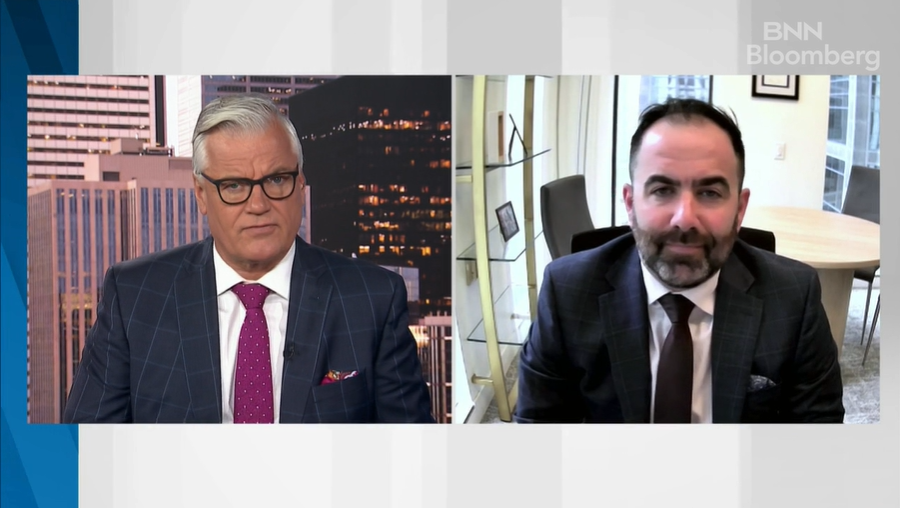
Jeremy Kronick, president & CEO of C.D. Howe Institute, joined BNN Bloomberg to discuss the Bank of Canada’s June rate decision.
June, 8 2026

Despite persisting concerns about rising demand for power from electric vehicles, data centres and a growing population, electricity prices have actually decreased in most Canadian provinces in recent years, according to a new study published by the C.D. Howe Institute.
June, 5 2026

Il faut savoir qu’au Canada, c’est l’institut C.D. Howe qui calcule les cycles économiques. Les économistes de cette organisation évaluent la durée, l’amplitude et l’étendue des cycles et définissent une récession comme étant un déclin prononcé et persistant de l’économie.
June, 5 2026
The council said in a bulletin Friday that two quarters of declining GDP in a row are not sufficient to call a recession and urged against reading too much into the recent data.
June, 3 2026
In the United States, the National Bureau of Economic Research, which is in charge of dating recessions, does not define recessions this way. Neither does the C.D. Howe Institute’s Business Cycle Council, the closest equivalent in Canada.
June, 3 2026
But Steven Ambler, a panel member of the Business Cycle Council, said the panel does not accept the recent Statistics Canada GDP data as criterion for declaring a recession.
June, 2 2026

Only about one-third of returns are simple enough for the CRA to complete from the data it holds, according to research cited in a recent C.D. Howe Institute study.
June, 2 2026
In Canada, recessions are formally dated after the fact by the C.D. Howe Institute’s Business Cycle Council, which looks at depth, duration and breadth across employment, income and output, not just the GDP line. They haven’t declared one, but it is a very close call.
May, 31 2026

He and economist Parisa Mahboubi co-authored a recent study for the CD Howe Institute, that forecasts the long-term GDP growth rate through to 2060 for Canada at 1.2 per cent, well below the 1.5 per cent projection in the spring economic update.
May, 24 2026

Canada’s productivity growth is in the doldrums, and trending worse. AI will disrupt the jobs market. Disruption of access to the United States, tariffs and an ageing work force will all drag down investment and productivity growth, without decisive action – or, as a recent CD Howe Institute study calls it, a Big Bang approach that bundles together a sweeping package of tax changes.