






By Don Drummond, Duncan Sinclair and Philipp Gladkov
Executive Summary
Like others, Canada's healthcare 'system' is reactive. It is focused on restoring to good health people who become ill or injured. It does relatively little to keep people healthy – to promote good health. Correcting this imbalance is the primary focus of this report. To support the re-balancing, the paper also addresses the crying need to standardize, extend, and consolidate Canada's fragmented health data and information.
The report's initial impetus was an invitation from the Canadian Institute for Health Information (CIHI) to address the issue of measuring health as it 'rolls forward' its next five-year Strategic Plan. CIHI has dealt largely with “health system” data. The health information we seek is broader and extends to population data. This approach expanded our investigation to include the health information provided by Statistics Canada and the management between CIHI, Statistics Canada and other agencies of the intersection between “health systems” and population data.
The scope of the matters addressed, however, extends well beyond adding data and information on the health status of Canadians and their populations. It extends into the key dimensions of policy directions informed by those data and information and the related development of practices and procedures associated with their implementation.
CIHI and Statistics Canada are well-suited to play leading roles in developing the methodologies and aggregating, analyzing, and reporting on the data and information that governments and others will need to support the formulation of policies and their associated practices and protocols aimed at creating a more even balance between optimizing the health of Canada's people and restoring their health. Their combined mandates enable unique partnerships with federal, provincial, and territorial (FPT) ministries of health, as well as a broad range of health organizations and partners across the country. A significant change in policies and/or practices/procedures will, of necessity, be based on data and information that assess the health status of individuals and populations in all their diversity throughout the length and breadth of the country.
The health information now provided by CIHI and Statistics Canada, as well as many other agencies across Canada, provides powerful building blocks to put in place a comprehensive health information ecosystem. We make several recommendations to this end.
Our first recommendation is that all partner governments and agencies involved in the provision and reporting of health and healthcare services work together to standardize and consolidate health data and information on both sides of the ledger, good health, and ill health, to enable the people of Canada to be among the healthiest in the world. Hopefully, the Pan-Canadian Health Data Strategy can help on that front.
Second, we recommend these agencies re-balance, deepen and consolidate health status reporting. That will involve complementing the reasonably comprehensive reporting on healthcare/health restoration with a fuller accounting of the health status of individuals and populations. Deepening involves drawing out the dimensions of health across factors such as age, sex, geography, socio-economic status, and ethnicity, and relating the determinants of health to their outcomes. Better disaggregation is needed to highlight communities and diverse population groups. This will facilitate a strengthening of work relating health determinants to outcomes. Mental health and children and youth require improved information.
The pandemic experience has highlighted the need to extend recent moves to make data timelier. Health information will likely continue to come from many places, but its collection and reporting must, and hopefully will become less fragmented. There is need for an agency, with CIHI and Statistics Canada being the most promising candidates, perhaps in partnership, to produce a consolidated report on the health status of Canadians.
Third, health information collection must be transformed to follow the transformations that may accelerate in how health services are delivered. Much of health information is gathered currently through billing information from physicians and institutions to provincial insurance plans. Care has been shifting toward community-based services provided by a wider variety of service providers. If health policy and practices and protocols shift as we urge toward the promotion of health, further transformations in the health 'system' will follow. If the gathering of information does not follow such transformations, we will not be able to evaluate properly health services and outcomes.
Our fourth recommendation is that CIHI and Statistics Canada work closely with the government of Canada in its commitment to produce a Quality-of-Life Index, a process Statistics Canada is already involved in. We also recommend these agencies work with the provincial and territorial governments in their development of policies, practices, and procedures to encompass the goal of optimizing the health of Canada's population with a commitment equal to that accorded to the repair of ill health over the past many years.
The late economist John Kenneth Galbraith said, “what you count counts, and what you don’t count, doesn’t count."1John Kenneth Galbraith (1960). To that we would add that keeping and making commonly available a record-in-common of what you have counted is also important. For some time, counting health has been relatively neglected. Expanding the measurement of, and reporting on, the distribution of health status among the diverse segments of the population and linking that distribution to all its underlying determinants would truly assure the people of Canada that health and well-being count in this country.
Introduction
Few, if any, of life's individual and collective attributes are valued more highly than good health. This may be particularly true for Canadians and their governments given the iconic status of medicare, the centerpiece of our publicly funded health-restoration 'system.' This report is focused on the importance, the urgent necessity even, of developing and applying policies and strategies that look to the positive, that focus on enhancing the health status of Canada's population. Step one is to develop metrics to measure health, following on the adage that what you count, counts.2Ibid.
One of Two Original Goals for Medicare Actively Pursued
Tommy Douglas' vision in 1947, on which the policy foundation of our so-called 'health system' rests, had two goals:3Campbell (2007).
- To eliminate financial barriers to the treatment services to which patients need access.
- To help the people of Saskatchewan avoid illness, reduce their need for treatment, and to achieve, maintain, and enhance their good health individually and as a population.4Ibid.
The pursuit of the first goal led to Canadian medicare. It is (past) time to proceed with greater vigor to achieve the second throughout Canada.
Health's Restoration Dominates Good Health's Optimization
There are two key aspects to health: restoring health, on the one hand, and promoting and supporting health and prevention of ill health, on the other. The former, healthcare, continues to be the predominant focus of Canada’s health system. Enhancing good population health and incorporating its social determinants into the system remains relatively neglected in government policies, practices, and protocols. Optimization of health counts as much or more than assuring that those who suffer illness have access to the treatment they need, important as that is. Health restoration services will always be needed but enhancing health not only increases wellbeing; it aids in controlling the high and growing costs of healthcare. The better the people's health, the lower the usage of healthcare there will be throughout one’s life course – as Dr. Geoffrey Rose once said, “It is better to be healthy than ill or dead. That is the beginning and the end of the only real argument for preventative medicine. It is sufficient."5Geoffrey Rose (1992).
If optimizing the well-being of Canada's people is the country's overarching goal, as most would assume it is, it is anomalous that no level of government has set specific objectives for its achievement, normally step one with any policy initiative. This is particularly strange given that healthcare consumes some 11.6 percent of our Gross Domestic Product and that personal health is a topic front and centre in the minds of most Canadians. The situation we face at present is somewhat analogous to fighting a war on two fronts. On the very active anti-illness front, we employ, quite successfully, a strategy to avoid defeat, mounting sorties against the multiple threats to people's health; COVID-19 is a timely example. On the neglected pro-health advocacy front, this report recommends a positive win-the-war strategy, adopting and pursuing aggressively a broader range of tactics to enhance good health.
Promoting Good Health
Some policy goals do exist for healthcare. Concern is perennial for greater accessibility, the reduction of wait times for example, or of the incidence of specific diseases or conditions like cancer or stroke, et cetera. But, oddly, no such objectives exist for progress on the positive side of the ledger – enhancement of the overall health and well-being of individuals and of the populations from which they are drawn. It is not for want of a clear definition of health. When established in 1946, the World Health Organization defined health6Constitution of the World Health Organization (1947). as “a state of complete physical, mental, and social well-being,” a definition subsequently amended in 19787Whaley and Hashim (1995). to read additionally, “that permits people to lead socially and economically productive lives.” Canadians want to experience nothing more and the country would benefit enormously were its population to rank high among the healthiest in the world. As a highly developed country, blessed with many assets, it is an achievable goal!
As in most ventures, among the most vital of the elements necessary for the success of any strategy is having ready access to good, reliable, and accurate information. In this case, we do have extensive and good, if fragmented and dispersed, information about the efficiency and effectiveness of our defences against illness. But if we were to decide to mount an offence in support of improving the health status of Canadians, individually and collectively, we would be hard-pressed to muster the requisite data and information to plan our offensive and assess its progress.
That is not to say we would be starting from zero. CIHI has concentrated strongly on data related to health's restoration (healthcare) over the past five years, but Statistics Canada has worked hard to provide statistical information and analysis about the health of the population, the many determinants of that health, and the scope and utilization of health and healthcare resources. To that work can be added Health Canada's role to "provide health information," contributions from the Public Health Agency of Canada, those of the Canadian Institutes for Health Research and its several funded data platforms,8Health Data Research Network Canada/Data Access Support Hub; Canadian Longitudinal Study on Aging Data Platform; Canadian Research Data Centre Network; Ontario Child Health Support Unit; and Population Data BC. and several others including the Centre for Health Informatics and Analysis at Memorial University, the Institute for Clinical Evaluative Sciences in Ontario, the Manitoba Centre for Health Policy, and the First Nations Information Governance Centre.9Council of Canadian Academies (2015).
Canada’s Founding Model a “Sick Care” System
As elsewhere, ours was designed as a 'sick care' system, one that reacts when someone falls ill; it focuses on restoring his or her health. It is not designed to promote good health but to diagnose and treat acute illnesses.10Ministry of Health and Long-Term Care (2007). This made sense over half a century ago when the Canadian populace was young, fairly healthy, and most of their illnesses acute and curable.11Statistics Canada (2016). Its entrenchment was supported by the following characteristics12Ibid.:
- Patients were relied upon to contact healthcare providers when they noticed symptoms.
- They were passive recipients of treatments and interventions mandated by professionals.
- Healthcare services were symptom/treatment-focused rather than patient-centred.
They need now to be complemented by a fourth characteristic, advocacy for steadily increasing health and well-being.
Biomedical Model Has Evolved to Provide More Expansive View of Health
The initial understanding of health was biomedical, claiming that a good state of health is the result of not having anything physically wrong; i.e., no physical symptoms, injury, disease, or disability.13Ownby et al. (2014). The model of health/care it created was based solely on restoring the body's status quo ante, essentially ignoring the patient's life context.14Kusnanto et al. (2018) and Fuller (2017). Its success was attributable to its ability to meet traditional health demands, cure infectious diseases,15Tuberculosis, pneumonia, yellow fever, smallpox, and diphtheria. improve infant mortality rates16A traditional indicator of population health. and create vaccines and antibiotics.17Adibi (2014). Over time its focus broadened, becoming an amalgam of the biomedical and newer psychosocial dimensions of health.18Engel (1977). This new predominant model remains reactive, however, still working predominantly on the repair of ill-health, paying little heed to the positive side of health's ledger, optimizing the good health of individuals and populations.19Katerndahl and Oyiriaru (2007). The major evolution in the model was the creation of evidence-based medicine,20Fuller (2017). which ‘cures’ and manages disease(s), largely through prescription medications.21Ibid.
Canadian Reports Have Advocated Rebalancing Toward Health Advocacy of Health/Healthcare
Wanting a broader perspective on health is nothing new. In 1974, Marc Lalonde, Minister of National Health and Welfare, famously advocated that our healthcare system go beyond a simply illness-based medical care system,22 Lalonde (1974). urging that the promotion of good health and prevention of illness become a public health imperative.23Martin et al. (2018). In 1986, a successor Minister, Jake Epp, released Achieving Health for All: A Framework for Health Promotion, underlining the changing nature of illnesses, recognizing that health had come to mean more than simply not being ill24 Epp (1986). and that the 'system' must address “effective ways of preventing the occurrence of injuries, illnesses, and the development of chronic conditions and their resulting disabilities.”25Ibid. This call-to-action was repeated in 2002, by the final Romanow Commission report entitled Building on Values: The Future of Health Care in Canada, stating: “For too long, Canada’s health care system has been overly focused on treatment rather than prevention. A central focus of primary health care must be on preventing illness and injury and helping Canadians stay healthy.”26Romanow (2002: xxviii). These reports were reinforced in the 2009 report A Healthy, Productive Canada: A Determinant of Health Approach by the Standing Senate Committee on Social Affairs, Science and Technology and its Subcommittee on Population Health led by The Honourable Wilbert Joseph Keon and The Honourable Lucie Pépin. They posited that Canada’s healthcare system reacts after diseases and illnesses (many of them preventable) have occurred27Keon and Pépin (2009). and that healthcare determines but 25 percent of good health.28 Ibid. Biological make-up accounts for 15 percent, 10 percent is attributable to the physical environment, and fully 50 percent is related to socio-economic factors.29Ibid.
Very recently the Commonwealth Fund in the United States has strongly recommended, as we do, that greater attention be paid to the measurement, recording, and reporting of health status and its relationship to the determinants of health other than healthcare services.30Dutton et al. (2021). The Fund is well known for its reporting over many years the relative efficacy of the healthcare 'systems' in a dozen countries in the OECD. In those rankings, neither Canada nor the United States do well, perennially ranking either last (the U.S.) or second or third from the bottom (Canada).31Ibid. In its most recent report, the Commonwealth Fund states: "The COVID-19 pandemic has underscored the urgency to invest in health in new ways. These include programs and initiatives that address the variety of factors that determine health, such as access to safe and secure homes and healthy food, having a stable income, and racial equity." 32Ibid. Those wise words apply everywhere, Canada included.
Chronic Diseases and Ageing
In the mid 20th century, the balance among types of illnesses changed – from acute to chronic –the occurrence and progression of many of which are influenced by consistent behaviour that has negative health implications, compounded by a longer lifespan, frailty, and dementia.33Keon and Pepin (2009). Chronic illnesses are non-communicable diseases (NCDs) whose development is increased by certain modifiable risk factors: tobacco use and exposure to second-hand smoke, unhealthy diets, insufficient physical activity, unhealthy weight (obesity and overweight), and harmful use of alcohol.34Audrain-McGovern and Benowitz (2011). Roughly four in five Canadian adults have at least one modifiable risk factor for chronic disease and 13.5 percent have three or more.35Risk factors include obesity, unhealthy eating, physical inactivity, heavy drinking, and daily or occasional smoking. These risk factors are considered modifiable, except for obesity. The most common risk factors across age groups are physical inactivity and unhealthy eating. Public Health Agency of Canada (2017).
About 80 percent of heart disease, diabetes, and respiratory diseases and roughly 40 percent of cancers are preventable.36Public Health Agency of Canada (2013). They can be mitigated through the promotion and adoption of good long-term health practices. That so many of these conditions persist and continue to increase in prevalence (see Fig 1 below) is indicative of the health system's failure to focus more attention 'upstream' by supporting and promoting good health more vigorously and consistently.37Branchard et al. (2018).
Figure 1: Prevalence of Chronic Diseases Among Canadian Adults.38Public Health Agency (2019).
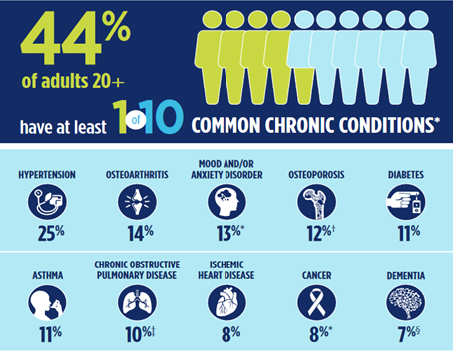
While 44 percent of Canadians live with at least 1 of the 10 common chronic diseases,39Heart disease; stroke; cancer; asthma; chronic obstructive pulmonary disease; diabetes; arthritis; Alzheimer disease or other dementia; mood disorders; and anxiety disorders 18.4 percent live with at least two; 34 percent live with at least one of the five major chronic diseases40Cancer; diabetes; cardiovascular diseases; chronic respiratory diseases; and mood and/or anxiety disorders and 8.9 percent have at least two of the five that cause around 65 percent of all deaths in Canada.41Public Health Agency of Canada (2017). It is estimated that chronic illnesses cost the Canadian economy $190 billion annually, $122 billion in indirect income and productivity losses and $68 billion in direct health care costs.
Figure 2: Age Adjusted Chronic Disease Increase.42Elmslie (2016).
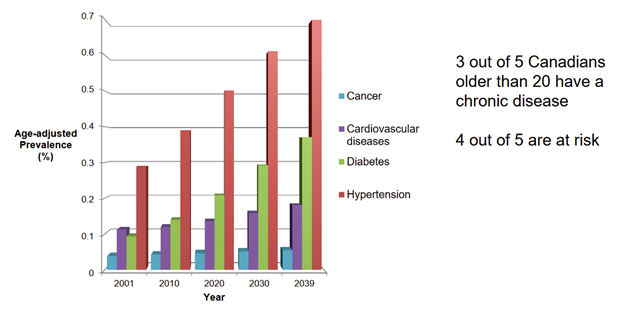 The incidence of chronic conditions is rising even after being age-adjusted – increasing faster among Canadians aged 35-64 than those aged 65 years and over.43Public Health Agency of Canada (2013). It is true that as people age, they are naturally likely to develop chronic conditions, frailty, and dementia, which limit their ability to live independently;44Drummond, Sinclair, and Bergen (2020). it is truly alarming to contemplate their development earlier in life.
Canada's ageing population alone is a challenge that must be addressed. When medicare began, seniors made up 7.6 percent of the population;45Statistics Canada (2015). currently, they make up 17.5 percent46Statistics Canada (2019). and by 2036, nearly one-quarter of Canada’s total population will be over 65.47Naylor et al. (2015). Seniors constitute Canada’s fastest-growing age group; their cohorts 75 and over will soon be the majority, a segment of the population our acute care model is not well prepared to accommodate. The number of seniors has increased by 4.2 million over the past 38 years.48Drummond, Sinclair, and Bergen (2020). Over the next 22 years, Canada will need to accommodate the needs of another 4.2 million,49Ibid. 85 percent of whom will have at least one chronic condition.50Martin et al. (2018). The core of the issue is the lack of policies and practices that promote good health throughout life and disease prevention over the long term. As Drummond, Sinclair, and Bergen highlighted in their 2020 report, Ageing Well, the progress of such conditions can be alleviated or mediated. Major gain can be made by the greater promotion of lifestyle changes in individuals, their families, and peers, the health system's greater attention to early detection of said risks, heading off the onset of chronic diseases and conditions,51Drummond, Sinclair, and Bergen (2020). and employing a more cohesive balanced focus on health restoration and health promotion. This is of particular importance considering the risk factor statistics for youth that show that over 70 percent do not eat vegetables and fruits as recommended,52Heart and Stroke Foundation of Canada (2019). two in three (62.4 percent) do not meet weekly physical activity guidelines53Statistics Canada (2019). and one in seven is classified as obese.54Rao et al. (2016).
Policy, Practices, and Data Skewed Toward Restoring Health
Currently in Canada, our policy, practices/protocols, and data/information are strongly oriented toward the health restoration side of the ledger. We have yet to develop their counterparts on the positive side, beginning with the data and information needed to inform policy formulation first and then the practices and procedures by which new more effective approaches can be implemented to foster health optimization, promotion, and the prevention of illness.
That our data and information bearing on individual and collective health status are so thin may well be due, at least in part, to the fact we do not have adequate measures of health. We also are not collecting the right sort of information and in some cases do not have reliable ways to collect the data needed to populate the appropriate health measures. The state of a person's health and well-being varies widely in accordance with each individual’s assessment of the degree of physical and/or mental ease or difficulty experienced when one endeavours to live his/her life as they wish. What a person considers to be the quality of their health status is a subjective judgement, and so it should be. It constitutes a personally determined measure of the degree of restriction that one’s health imposes on one’s desired activities. It is because self-assessments of health and well-being are subjective and therefore somehow 'biased' that the generally accepted default measures of health are almost all objective – length of life, mortality rates, and data on the absence of disease, illness, or disability, all of which ignore the fact that many people, especially among those with stabilized conditions or disabilities of long-standing, consider themselves well, happy, and indeed healthy.
Statistics Canada a Major Player in Data Collection and Analysis
Our lack of health information and data impedes the ability to set health policy goals or track progress. The information we do possess on the broader set of health's determinants is scattered, not routinely produced, and generally does not encompass all the aspects that affect the health of either individuals or populations. Not all the information collected by the many agencies involved in health information is shared, thus compromising the ability to do analyses and present a comprehensive picture.
Statistics Canada, our respected national agency, is a major player on the status of health and the positive health perspective front. Most of the information on the health of Canada's population originates with Statistics Canada's Centre for Population Health Data, which is responsible for the Canadian Community Health Survey (CCHS) and the Canadian Health Measures Survey (CHMS), as well as the Canadian Cancer Registry and the new Canadian Health Survey of Children and Youth (CHSCY) and for the reporting of vital statistics relating to deaths, causes of death, births, and stillbirths. Through its Health Analysis Division, Statistics Canada has been working hard on a comprehensive approach focusing on health's determinants and outcomes from birth to the end of life. In addition, a diversity lens is being applied to identify health differences and inequities through the analysis of several characteristics: disability, gender, and immigrant status, for example, and there is also a special focus on vulnerable populations, children, and youth, those living in poverty, Indigenous, and the ageing population. Statistics Canada is also working on standards for the collection of health information.
The results of Statistics Canada's surveys and analyses are widely distributed.55Statistics Canada (2021). StatCan COVID-19: Data to Insights for a Better Canada.56Statistics Canada (2021). Gender, diversity, and inclusion statistics.57 Statistics Canada (2021). Health Reports.58Statistics Canada (2021). Cancer surgery in Canada, two decades of data.59Statistics Canada (2021). Health Indicators. Through its Health Analysis Division Statistics Canada also publishes monthly Health Reports in an open-access, peer-reviewed population health and health services journal.
Linking data on health to the several determinants of health, especially its socio-economic and lifestyle factors, will be key to understanding their contributions to and role(s) in ultimately improving health outcomes. Statistics Canada is a leader in identifying such linkages and has expertise and experience in accessing the required information. An example of Statistics Canada’s work at the forefront is using Artificial Intelligence and Machine Learning to estimate the prevalence of certain chronic conditions by looking at the type and frequency of healthcare services rendered as revealed by provincial and territorial physician billing data.
Challenges of Current Positive Health Perspective Measures
The current measures of health taken together are everywhere very crude. The most frequently used measures are negative health-perspective outcome indicators, such as incidence of illness, infant mortality rate, condition-specific and age-adjusted mortality rates, years of potential life lost, and leading causes of death. When they are positive, as in the case of life expectancy at birth and longevity, they are still evidently crude in that they say nothing about the quality of the lives they measure. They also suffer from the lack of immediacy, the long lead time needed before changes are perceived.
Although individual health is difficult to define given that its perception is deeply personal and, admittedly, more difficult yet to measure collectively, simple logic demands that some set of indicators based on measures of health, not only the relative absence of disease, should be employed to link the good health of individuals and populations to the money and effort society and individual Canadians spend to achieve it. Development of those indicators constitutes the major challenge this report puts to CIHI, Statistics Canada, and others of Canada's experienced measurement and "counting" experts.
Why the Inattention to Optimizing Health?
The margins of our system’s healthcare delivery silos have only been slightly modified. It is a system that is split among hospitals, specialists, and the provision of prescription drugs, primary care, and home and community care.60Sutherland and Hellsten (2017). These, at best, semi-connected structures are not capable of addressing the more relatively complex modern health and healthcare issues.61Ibid. The data and information derived from the silos' work exclude the contributions of many other 'players' in the teams of health providers that are the way of the future: pharmacists, physical and occupational therapists, dentists, optometrists, counsellors, personal support workers, not to mention the other workers delivering the range of health support services typically provided by community agencies with municipal and/or charitable funding. The resultant pre-team fragmentation of health data results in many patients falling between the cracks of provider, care, and support settings and in avoidable emergency department visits and hospital admissions.62Kristensen, Bech, and Quentin (2014). Fragmented care results in poor population health outcomes and substantially higher costs to the system.63Frandsen et al. (2015). The development of inter-organizational and multi-professional networks is a promising way to shepherd resources, share knowledge, and, in turn, improve population health.64Bevc (2015).
Even in the face of strong evidence on the benefits of preventive care, the delivery rates of such services remain low in Canada.65 Kaczorowski, Goldberg, and Mai (2011). A 2011 study of 246 physicians across 110 different sites in Ontario revealed that while physicians understand the benefits of preventive care, there exist administrative barriers to their provision, specifically, lack of time, resources66Information technology and ancillary staff. and knowledge of appropriate screening guidelines and management algorithms.67Ibid. Similar findings were shown in 199968Lane and Messina (1999)., 200169McDonald et al. (2001). and 2004.70Goldzweig et al. (2004). Facilitators of increased use of preventive care included: financial incentives, knowledgeable assistants, availability of screening and management guidelines, interconnected electronic medical records, computerized reminder systems, and perception of greater organizational commitment to quality.71Kaczorowski, Goldberg, and Mai (2011). Outcomes are obviously important. Yet as the 'system' currently operates, while the provision of services,72Which heavily distributes prescription medication. what they constitute, and the timeliness of delivery are measured, service outcomes are not; it is estimated that as many as 20 percent of physicians’ services73Wyonch (2020). and 30 percent of their ordered tests74Canadian Institute for Health Information (2017). are ineffective and the cost of their provision is essentially wasted.
This is to a considerable degree a by-product of our predominant75It is the predominant form of compensation but is not the only form in the case of physicians as alternative payment methods have risen in importance. payment model, fee-for-service (FFS), generally used throughout Canada for paying physicians, dentists, optometrists, and others, including hospitals and other institutional providers under 'pay-for-performance' budgeting. Such models of rewarding healthcare's providers are antithetical to the goal of optimizing health and well-being,76Glazier et al. (2009). a conclusion supported by the Doctors Nova Scotia (DNS) association, the oldest medical association in Canada, which declared that the FFS model does not positively support preventative medicine or chronic disease care.77Doctors Nova Scotia (2017). Alternatives do exist. In Ontario, family health organization (FHO) physicians are more likely to reach preventative care targets than FFS physicians, through the greater incentives and stronger promotion of preventive care78Kantarevic and Kralj (2011). incentivized by their blended payment scheme.79Rudoler et al. (2015).
CIHI Can Play a Role in Rebalancing Canada’s Fragmentation
CIHI works in a unique partnership with federal, provincial, and territorial (FPT) Ministries of Health, as well as a broad range of health organizations and partners across the country. Notably, CIHI has a close working relationship with Statistics Canada and the Public Health Agency of Canada (PHAC).80Canadian Institute for Health Information. Strategic Plan. CIHI was established to improve and deliver comparable and actionable information to accelerate improvements in healthcare, health system performance and population health across the continuum of care.81Canadian Institute for Health Information (2021). Vision and Mandate. This is accomplished by providing high-quality, impartial, comparable information about the delivery of healthcare in Canada, the performance of Canadian health systems, and the factors that affect Canadians’ health.82Canadian Institute for Health Information. Strategic Plan.
CIHI’s 2016-2021 Strategic Plan Had the Goal to Rebalance Healthcare and Population Health Optimizing
CIHI’s 2016-2021 Strategic Plan included a goal to do more on population health – "Produce actionable analysis that will accelerate improvements in population health outcomes and health system performance." The plan noted the priority placed by CIHI’s stakeholders on many of the objectives advocated in this report, including:
- Link data across sectors to understand better how health systems can be improved and the impact of social and economic determinants of health.
- Ensure that both patient-reported experiences and outcomes are integral aspects of CIHI’s work.
- Measure health status and determinants of health, by using a broad range of data sources (e.g., social services, financial information) and linking them to health status and determinants of health data.
- Focus on vulnerable populations, including seniors; recipients of mental health services; First Nations, Inuit, and Métis; and children and youth.
Measurement of Health Outcomes
CIHI’s goal of improving information on health system performance received the promised attention with over 20 reports in 2020 alone and 64 since 2008.83Ibid. On the ‘population health’ theme, however, since 2004 there have been only 12 reports released with only three84Alcohol harm in 2017, obesity in 2011 and overweight and obesity in 2004 related to health status.85Canadian Institute for Health Information (2021). Population Health. Although the imbalance is understandable due to concern for the high and increasing cost of health-restoration services, nevertheless, inspecting the 20 primary themes, only two86Population health and mental health and addictions. relate directly to the health of Canadians, prior to any interaction with the healthcare system.87Canadian Institute for Health Information (2021). Access Data and Reports.
This imbalance between health restoration and population health is relatively new. In the early 2000s, CIHI routinely published reports through its Canadian Population Health Initiative (CPHI) on population health themes,88Indigenous Peoples’ Health, Income/Poverty, Obesity, and Early Childhood Development. the last reporting data from 2009. The early years of this decade also saw the creation of several new national organizations to provide information on population health to governments, such as the Public Health Agency of Canada (PHAC), the National Collaborating Centres for Public Health (NCCPH), and the Canadian Institutes of Health Research (CIHR). Perhaps CIHI deferred to these new organizations and the ongoing work of Statistics Canada to meet the need for major reports on population health. CIHI has published reports on specific health issues,89Alcohol Harm in 2017 or Harm from Substance Use in Youth in 2019. indicating it does employ a population health lens just not a population health lens writ large. However, given CIHI's reputation and other assets, it makes sense for it and Statistics Canada to work together and to collaborate with the new players whose mandates are more niche-focused, taking the initiative to produce the most timely, comprehensive, and accurate reports possible, while simultaneously housing the results within one area. CIHI set out a strategic plan that attempted to remedy the current health data gaps in Canada, but it did not succeed – yet it could with collaboration between Statistics Canada, Health Canada, the Public Health Agency of Canada and other players.
Recommendation 1: Bring Key Players to the Same Table
An Expert Advisory Group is to report to the Pan-Canadian Health Data Strategy by December 2021. While the effort is strongly related to issues arising from COVID-19, it is also to take a longer view to improve Canada’s ability to address population and public health issues. It should weigh in on key governance issues. Many agencies could expand and improve on their current mandates and improve access to their data and analysis. More effective partnerships should be established. Perhaps the most challenging and potentially most controversial might be what body or bodies takes the leadership role in establishing a national framework or standards for the players and consolidates and syntheses information for policymakers, health professionals and institutions and the public. CIHI90CIHI has begun such work with its Health System Performance Framework that can be used to understand the standards and data needed for reporting on both the health system and health of the population. and Statistics Canada would seem the most likely candidates given their broad mandates and capacities. The best option is likely a partnership arrangement between the two.
To repeat, CIHI possesses a broad mandate which enables unique and far-reaching partnerships within the Canadian health actors’ field, interacting with FPTs, municipal sectors, as well as with physicians and other health professionals/authorities. Statistics Canada generates much of the health status data and has strong analytical capacities including the ability to link data bases. Individually and together, they could help in the realignment of our current health system through leadership roles by bringing together those FPT government ministries/agencies and other health authorities with the goal of shifting the focus of the country towards a new, balanced model of health promotion/health restoration.
Importantly, this partnership is already in action, with CIHI sending data from several data holdings to Statistics Canada annually for linkage91Statistics Canada (2018). Canadian Community Health Survey Data (2000 to 2011). to the Canadian Community Health Survey, census data, tax files and other data sources – an expansion of this type of collaboration is what we are recommending. Furthermore, this coming together of health authorities, government policymakers, educators, and others would fulfill the call-to-action in the Keon-Pepin report of a "whole of government" approach to optimizing the health of the population.92Keon and Pépin (2009). Furthermore, a deeper CIHI-Statistics Canada relationship should expand to include other Canadian health data creators,93Many of whom are already doing great things in the world of positive health measurement. such as Population Data BC (PopData); the Manitoba Centre for Health Policy; the Newfoundland and Labrador Centre for Health Information; Ontario’s Institute for Clinical Evaluative Sciences (ICES); the Canadian Partnership for Tomorrow's Health (CanPath); and the Centre for Health Informatics and Analytics (CHIA).
Lastly, this leadership initiative in optimizing health could be exhibited through hosting an international conference on the quest for better health, where countries with similar missions are invited. Additionally, international bodies and organizations such as the Organisation for Economic Co-operation and Development (OECD) could be asked to participate. Reaching out to international counterparts to collaborate on Well-Being indices and methodologies would be highly advantageous.
Recommendation 2: Re-balance, Deepen and Consolidate Health Status Reporting
All agencies involved in health information should seek to re-balance the skew toward health restoration and report more on health and health status, in particular from a positive perspective as opposed to only documenting the absence and/or presence of illness, disease, and disability.

Such a re-balancing will be be especially important for CIHI if it is to follow through in the next five years on the aspirations in its 2016-2021 Strategic Plan. Currently, CIHI’s flagship publication is Expenditure Trends, which is concerned with the cost of health restoration interventions. The production of a similar annual report focused on health promotion, health status, and illness prevention, driven by measures that relate to optimizing individual and population health94Self-assessment data would play an integral part of both. would be highly beneficial. Given its respected status as a key 'counter' of health-related information, the production and release of such an annual report within the time limit of CIHI's next Strategic Plan would correct the strong inference that population health, to quote Galbraith again, "doesn't count" in this country. This inference should be removed as soon as it possibly can.
Statistics Canada does report on population health and does valuable analysis. But here too the emphasis is too often on the negative side of the health optimization/health restoration ledger – the 'absence-of-illness' side.
The emphasis on health status measurement from the positive perspective should be based on data derived from actual measurements of the health of individuals obtained by self-assessments,95Can be linked with data-from-wearables technology which is fast becoming so widespread and cannot be biased. and of the contributions to their health and well-being of their socio-economic, psychological, and social environments. Current surveys of health in Canada should better allow for such measurements, although they are improving thanks to the work of Statistics Canada. Nevertheless, collaboration between Statistics Canada, CIHI and others to improve further population health surveys to measure health comprehensively to include its several and different determinants and link health to those determinants would be ideal.
Furthermore, augmenting the survey is necessary to ask questions that go further than self-assessments of health, that go into how and what people value when assessing their quality of life and health, what characteristics they identify positively or negatively with health – their assessment of health from the perspective of why they feel they are healthy or not healthy and to what degree? What specifically do they value on the positive side and what aspects of their health are compromised by the negative? There is also merit in asking about people’s resiliency, everyone at one point or another will be sick or injured, yet, for some they seem to bounce right back to normalcy, some crawl back and some do not ever recover. Resiliency has been identified to be a key link with positive health96Srivastava (2011). and it was a studied component under the Longitudinal Health Survey, until its cancellation in 2010. To understand how and why people respond the way they do to a health setback requires a longitudinal analysis of the same individuals. Potentially revealing how we can aid people when they get sick or injured to bounce back quicker, or at the very least, how we can help people recover – because sickness and injury will always be a part of one’s life course. This would provide a broader picture of people's well-being in which health plays a key but not the sole role.
Additionally, equity demands deeper information than is available on the distribution of health in population groups throughout the country. Factors such as geography, ethnicity, age, sex, socio-economic status, et cetera greatly impact one’s health status and explain marked differences in average health status, especially amongst sub-populations with poor health. Information needs to be more granular, including coverage of local communities and more detail on certain population groups. Such information will strengthen the ability to do useful linking of health determinants to outcomes of health.
Additionally, while CIHI and Statistics Canada are working hard to address Indigenous health data, little is available for on-reserve First Nations Peoples, a population group over-represented in almost every metric of poor health and its indicators. Indigenous health is an area where a lot of consultation is still needed, as Indigenous views on health typically differ from those of the Non-Indigenous.97Ring and Brown (2003).
The fast-breaking effects from the COVID-19 pandemic have highlighted the need to build on recent efforts to make health data timelier. It has also made clearer the need to capture interactions across health issues such as the indirect impacts of COVID-19 over time.
Greater analysis and reporting are needed on health's social determinants, like income, education, sex, age, geography, lifestyle et cetera, to further the work of Statistics Canada and others and to complement the reports that CIHI provides on health restoration. The 2016 Delphi Study provides good context and research for how to create and measure healthy populations in the 21st century, as well as identify key sub-population98Such as those living in impoverished conditions and immigrants. groups to address the serious problem of health system inequities.99Vuik, Siegel, and Darzi (2017). A significant component will be lifestyle information;100 It is beyond the scope of this paper to delve deeply into the links of health with various determinants, that being work we urge CIHI, in partnership with Statistics Canada and others, to probe more fully. We simply note here that not all the factors typically identified as determinants of health are independent. There are complex relationships among the determinants. For example, certain lifestyle issues affecting health, such as tobacco consumption and nutrition, are strongly related to income and education. the WHO states that 60 percent of factors related to individual health and quality of life relate to lifestyle.101Ziglio, Currie and Rasmussen (2004). Key to this work is ready access to the underlying data.
Progress must be made possible to reduce the fragmentation of health information in Canada. With our multiple jurisdictions, the reality is that many players will remain important and will contribute important pieces of information. There is an urgent need for an entity to consolidate all the bits and pieces into a comprehensive and timely picture on the health of Canadians, in the same way CIHI consolidates health restoration spending data in an annual report. CIHI and Statistics Canada would seem to be the prime candidates to perform such a consolidation role, perhaps in partnership with one another.
Recommendation 3: Transform Data Collection and Analysis to Follow Transformation of Health Services
The collection of health data is structured around the traditional providers of health services involved in health restoration, particularly physicians and institutions. This follows from the fact that much, if not most, of the information is gathered from billings to provincial health insurance plans. Already, much of healthcare is shifting toward community and team-based approaches with services provided by a wide array of providers, many if not most working in teams. Current systems do not capture such activities well. Expenditures are missed. More importantly, there is a gap in knowing how well communities and health teams' providers work together to improve health status. The changes being urged in this report in re-balancing, deepening, and consolidating health information will need to be implemented while data collection is re-aligned with the shifts in health services. The approaches and mandates of many agencies will change as a result.
Great attention is being paid across Canada to mental health. But the data ecosystem is not supportive. Ontario is the only province to report data to Statistics Canada on individuals admitted to the designated adult inpatient mental health beds in general and specialty facilities. The data provide information on mental and physical health as well as social support and service. Without information from other provinces and the territories, it is not possible to get a national picture of mental health or to link to various other data bases such as socio-economic factors to better understand this critical aspect of health. It is the case that inpatient mental health data is captured across Canada through the Hospital Mental Health Database; CIHI provides the dataset to Statistics Canada annually under a data sharing agreement.
An effort by any Canadian government to facilitate the elderly living longer in their homes should be informed by information on the use of assistive devices, including insulin pumps and supplies, home oxygen, respiratory equipment and supplies and ventilator equipment and supplies. It will be important for an agency to consolidate and analyze information provinces and territories collect on such devices.
COVID-19 has revealed further flaws in the fractured nature of health data collection and dissemination in Canada. Provinces and territories collect data on all COVID-19 testing results as well as case data on positive cases. These data are shared with the Public Health Agency of Canada without identifiers and are not shared with Statistics Canada. If the data were available to Statistics Canada with identifiers, links could be made to other Statistics Canada data bases to better understand dimensions such as race, Indigeneity, socio-economic status, health history and health outcomes. A parallel situation is arising with provincial and territorial data on COVID-19 vaccination data. The data are not being conveyed to the Public Health Agency or any other federal organization including Statistics Canada. With the data, Statistics Canada could develop a national picture of vaccination progress and link to various other data bases in aid of informing future vaccination rollout plans.
Recommendation 4: Collaborate to Create a Canadian Health and Well-Being Index
If a FPT government or cross-provincial/territorial coalition were to decide to go to war in support of better health, at present, no health data actor could supply the information required to inform the targets and track its progress toward its objectives. A place to begin collecting and producing the requisite information would be for health data authorities to collaborate directly with the government of Canada (Finance Canada) in its commitment to producing a Quality-of-Life Index, where health status, individual and collective, will undoubtedly be a critical component. As a base for that component, measures of health and well-being first must be developed, a challenge that seems natural for Statistics Canada, CIHI and others to undertake – such an initiative would align with CIHI's rolling-forward its Strategic Plan. Statistics Canada is already working with Finance Canada on many of the components in the Quality-of-Life Index.
At present, this would not be possible solely with CIHI’s current health status indicators102Canadian Institute for Health Information (2021). without the development of others to complement them. For instance, the examples currently listed under ‘health indicator’ are the cost of a standard hospital stay; cardiac revascularization rate; and the proportion of physicians in rural areas,103 Ibid. none of which relates to the health or well-being of individuals or populations. Nor do Statistics Canada’s current health indicators capture what is needed for the kind of index Finance is charged with developing. To capture the health status of Canadians and ensure good health, more nuanced aspects of health104Such as weight, activity levels, nutrition, socio-economic determinants of health, self-assessment of health, living environments, income, education, and such. together with a social determinant approach need to be developed and integrated. This is what is in the works in England with its comprehensive national health index.105Davies (2018).
A Well-Being of Canadians index should be composed of all aspects of health measurement, socio-economic conditions; self-assessment data; et cetera. CIHI’s Your Health System (YHS) platform offers a promising base but would need further development. YHS shows the potential of algorithms to put together existing illness-related data with self-assessments of health, merged with data from the fast-developing field of wearable technology to record individual physiological data, potentially available in quantum encrypted form through the internet (G5) to ensure its privacy. This could all be connected and analyzed algorithmically into a credible measure of health and well-being that could be reported by regional subgroup, province/territory, or the country. The current CIHI reports relating to health restoration services would nicely complement this metric. Such measures of health and well-being would constitute a powerful lever of CIHI’s growing role in the expansion of FPT data originating in Ministries other than Health and in-turn fit the agency's name as the Canadian Institute for Health Information. This could be an area where CIHI also works with the national organizations that focus heavily on population health, Statistics Canada, and Health Canada in particular, but also PHAC; the NCCPH; and CIHR.
Existing Canadian Well-being Index
Inspiration and collaboration could also be gained from the University of Waterloo’s Canadian Index of Wellbeing (CIW), the foundational premise of which in 1999 was to produce a comparative figure with Gross Domestic Product (GDP);106University of Waterloo (2016). while GDP rose 38.0 percent from 1994 to 2014, Canadians' quality of life as measured by the CIW did not match its rise,107Ibid. increasing only by 9.9 percent.108Ibid. The index is derived from a systematic approach to measuring well-being by examining several domains: Community Vitality, Democratic Engagement, Education, Environment, Healthy Populations, Leisure and Culture, Living Standards, and Time Use.109 Ibid. This is achieved by using 64 indicators representing eight interconnected domains relating to Canadians' quality of life.110Ibid. Figure 3 illustrates this process:111Ibid. Page 2.
Figure 3
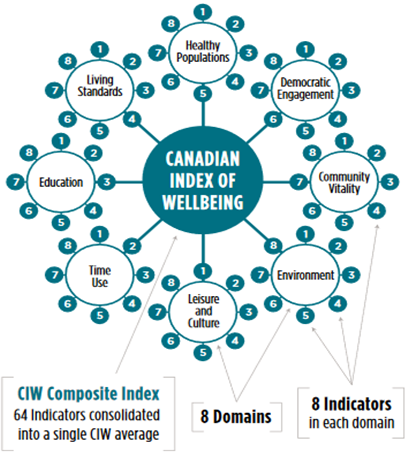
The CIW merges the non-qualitative objective measures of health with self-assessments of health and its determinants, thus illustrating an understanding of the interconnectedness of the many aspects of wellbeing.112Personal wellbeing, physical conditions, life expectancy, mental health, functional health, lifestyle, and behaviour of or occasional smokers among teens aged 12 to 19 years, public health, healthcare. This perspective is shared with The Public Health Agency of Canada.113Public Health Agency of Canada. (2012). The government of Canada planned Quality of Life Index will surely utilize individual and collective health status as its foundation too, all drawing on the same sources of data as CIHI.
Health Adjusted Life Expectancy (HALE)
In 1991, the National Task Force on Health Information highlighted that Canada needed a health information system that would assess the health of Canadians through an aggregate index of population health. In 1996, Michael C. Wolfson, who at the time was the Director General of the Institutions and Social Statistics Branch at Statistics Canada and would become an Assistant Chief Statistician, proposed such an index, HALE. This index understood that life expectancy estimates are insensitive to the health status of the population and that what was needed was something that could explain and display one’s quality of life alongside its quantity.114Wolfson (1996). HALE was estimated using McMaster University’s Health Utility Index (HUI) scores,115The index focuses on the functional aspects of health and includes a valuation of health, where years lived are not treated equally, but rather weighed according to health status.116Ibid. In such a measurement, years lived in good health are given a higher weight than poor health. Furthermore, HALE in its calculations can account for the burden of ill health, health problems and education and health. It remains a mystery why this metric, with McMaster in its third version of the HUI,117HUI3. is it not in use or even under consideration.
Promising International Practices
England
Policymakers in England understand that making health status a core measurement of government success is required. To do so, they too are deliberating the idea of creating a national health index. The Chief Medical Officer for England in 2018 launched the initial push to begin an initiative that would provide a comprehensive, top-level indicator of health that can be tracked alongside GDP.118Elwell-Sutton, Finch and Alderwick (2019). The index will measure health across three primary domains and be reflective of the multidimensional determinants of population health and equity:119Davies (2018).
- Health outcome measures (such as mortality).
- Modifiable risk factors (such as smoking).
- Social determinants of health (such as child poverty).
The goal is to have an index that produces a single measure or score of health that can be disaggregated into these three varied parts. This index would operate similarly to the National Health Service’s (NHS) overall patient experience score, which calculates results from varied individual patient survey questions (how long people waited for care, and satisfaction with their doctors and nurses) and combines the results into a score ranging from 0 to 100.120Elwell-Sutton, Finch and Alderwick (2019). Similarly, this composite health index will be designed to provide comparable progress over time.121Ibid.
Italy
The Italian National Institute of Statistics (ISTAT) publishes annually a report on well-being indicators entitled “Equitable and Sustainable Well-Being in Italy.”122Alaimo (2020). These reports are presented nationally and regionally, further categorized by gender, age, and education level.123Ibid. The most recent edition of the report from 2019 contains 130 composite indicators, divided into the following twelve domains:
- Health.124life expectancy at birth, healthy life expectancy at birth, mental health index score, infant mortality rate, road accidents mortality rate, age-standardised cancer mortality rate, age-standardised mortality rate for dementia and nervous system diseases, life expectancy without activity limitations at 65 years of age, overweight or obesity, smoking, alcohol consumption, sedentariness, and adequate nutrition.
- Education and training.
- Work and life balance.
- Economic well-being.
- Social relationships.
- Politics and institutions.
- Safety.
- Subjective well-being.
- Landscape and cultural heritage.
- Environment.
- Innovation, research, and creativity.
- Quality of services.
Spain
In 2011, the “Health in All Policies” program was implemented, a Public Health led initiative that seeks to embed health principles and actions through all institutional action on health,125Ibid. while considering the health implications of all governmental decisions, enlisting intergovernmental synergy on improving health, and avoiding health impacts harmful to population health and health equity.126Ramirez-Rubio (2019).
In 2013, Spain launched the Strategy of Health Promotion and Prevention (SHPP), the base for its National Strategy on Public Health.127Bernal-Delgao (2018). SHPP promotes population health and well-being by fostering healthy environments, lifestyles, and by improving safety.128Ibid. The strategic measures used are: empowerment of public health; coordination through governance; equity in health; health service reorientation; intersectoral health; health empowerment; healthy and safe environments; and community involvement.129Ibid. This strategy was developed with a life-course approach that addresses the main factors130Healthy eating, physical activity, tobacco consumption, hazardous drinking, emotional wellbeing, and safe environments for the prevention of accidents. related to non-communicable diseases.131Ibid. Health promotion and specific prevention guidelines are advertised throughout: healthcare, education, and community/local settings for intervention.132Ibid. One of the key pillars of this strategy is local (municipal) implementation. To join, the municipality's city council must endorse the policy, designate a local coordinator to establish a schedule of actions to be carried out and make a presentation to the public.133Ibid. From there two steps follow:134Compos et al. (2017).
- Establishment of an intersectoral group, that advances health and equity within the municipality through the participation of different sectors. Healthcare, education, social welfare, transportation, urbanism, sports, and the environment are essential areas135Although each municipality is free to adapt the composition of this working group to its needs. although each municipality is free to adapt the composition of its working group to its needs.
- The identification of resources for health promotion and prevention. To collect information that can improve the population’s lifestyles, an online map of resources for health is provided. In this application, municipalities can include information on available resources for the factors addressed in the strategy.136The resources mainly concern physical activity, healthy eating, prevention of harmful consumption of alcohol, smoking prevention, and emotional well-being.
Municipalities can apply annually for funds and are encouraged to adopt a social determinant of health and equity approach.137Compos et al. (2017). The training of professionals is considered an essential element of the program. An online course on Local Health (50 hours) has been set up, including information on the local implementation of the SHPP, practical tools, as well as examples of good practices on health promotion and prevention carried out at a local level.138Ibid.
Asia-Pacific139India, China, Singapore, Australia, Malaysia, Taiwan, Japan, Thailand, Indonesia, South Korea, and New Zealand.
The Asia-Pacific Personalised Health Index, assesses the progress toward personalized healthcare, shifting from a one-size-fits-all treatment of disease to maintaining a high and healthy quality of life by applying the right health interventions for the right person and population in the right place at the right time.140Copenhagen Institute for Futures Studies (2020). There are four aims of the index:141Ibid.
- Help stakeholders throughout health ecosystems understand local, national, and regional strengths and needs related to the future of healthcare.
- Contribute to a fact-based discourse about personalized healthcare.
- Make sought-after data publicly accessible.
- Better equip decision-makers and leaders for emerging changes in healthcare.
The index is constituted of the following:
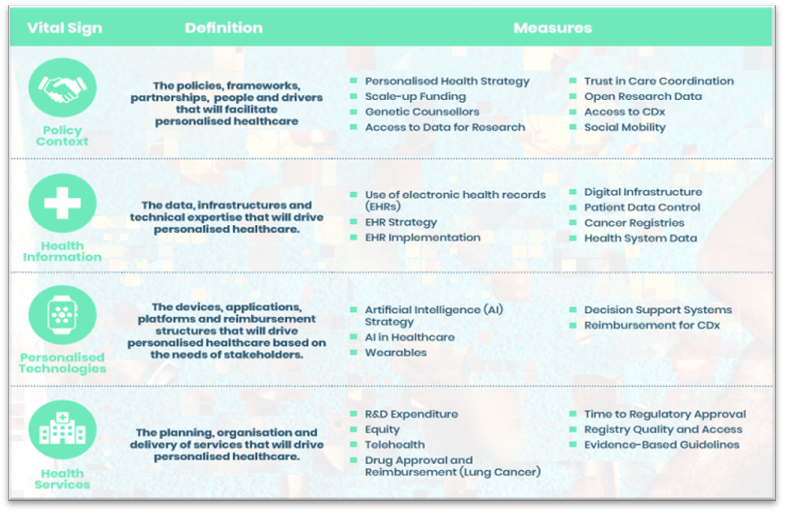
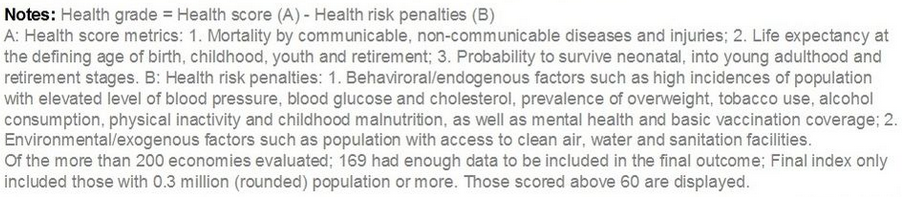
Although this index does little to assess health status or personal well-being, it highlights the transitional potential of healthcare. It aims to assist health restoration services to fit the mould of current health demand, a patient-oriented approach. The goal is to ensure the health restoration service system (healthcare) is adequately adjusted to meet current health demands and utilize the rapid evolvement of health technology and information. As a result, the system would promote health and optimization of population health but when health restoration services are needed (and they always will) and tailored to the life context of each individual patient. It also demonstrates a potential ‘floorplan’ to integrate wearable technology into measurements of health.
The Bloomberg Healthiest Country Index
This index ranks 169 economies according to factors that contribute to overall health. The index assigns grades out of 100 based on variables including life expectancy and cause of death, including negative scores for health risks such as tobacco use and obesity.142Miller and Lu (2019). It also takes into consideration environmental factors including access to clean water and sanitation.
The Indigo Wellbeing Index
This index measures the health of 50 countries using ten key measures: blood pressure, blood glucose, obesity, depression, happiness, alcohol use, tobacco use, exercise, healthy life expectancy, and government spending on healthcare.143Global Perspectives (2021). The indicators are measured with weights of <0.3 for a poor score, a fair score of 0.3 - 0.5 and a good score of 0.5+.144Ibid.
HealthPartners
The North American healthcare organization HealthPartners is also creating Summary Measures of Health and Well-Being, with the following primary components:145Kottke et al. (2016).
- Current health status.
- Sustainability of health (lifestyle behaviors and preventive services that determine future health).
- Life satisfaction (self-assessed overall well-being).
For current health, disability-adjusted life year (DALYs) is used as the measure of current health, which comprises years of potential life lost (YLL), which is an estimate of the burden of death on a population, and years lived with disability (YLD), which is an estimate of the burden of nonfatal disease and disability. The second component, sustainability of health measure, is comprised of 6 behaviors associated with health alongside a clinical preventive services index that indicates adherence to evidence-based preventive care guidelines. The 6 behaviors are tobacco use, fruit and vegetable consumption, physical activity, alcohol use, sleep adequacy, and healthy positive thinking.146Ibid.
Data Sources for the Summary Measures of Health and Well-Being
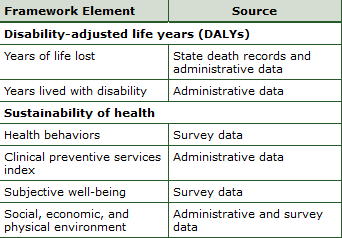
The final component of the measure is assessing subjective well-being. Life satisfaction has been chosen as the summary measure of subjective well-being, to be measured through seven domains that affect subjective well-being: emotional functioning, physical functioning, career satisfaction, adequacy of financial resources, social/interpersonal relations, community support, and life's meaning and purpose.147Ibid.
Internationally, Focusing More on Health is a Work in Progress
Internationally, more interest is being focused on promoting good health and on more measurements of health indicators to complement those associated with health restoration services. Such measurements have a strong focus on the socio-economic, psychological, and to some extent environmental determinants of health. For the most part to date, as noted above, these measures of health tend to be rather crude and do focus to a degree on the negative (absence of disease) perspective. They suggest that the current methodology to measure health is also to track the prevalence of risk factors, such as obesity; smoking; abusive alcohol consumption; and lack of physical activity plus individuals' self-assessments of their health. To date, no one has particularly got it right - but health systems do learn from one another. Just as Canada carried the torch for public Medicare, once again the opportunity presents itself to advance the measurement of individual and population health status. While improving domestic measures and reporting, CIHI, Statistics Canada, and the other 'players' in the health information field, should also see value in collaboration and consultation, and convene a meeting of interested parties and international agencies to move forward together.
Concluding Remarks
CIHI, Statistics Canada and the other agencies involved in Canadian health information do great work. But there is opportunity, perhaps the necessity, to do even better individually and particularly through partnerships. Currently, CIHI reports regularly (annually) and comprehensively on health restoration (healthcare) and healthcare spending but sporadically and less comprehensively on population health and its relationship to the socioeconomic and other determinants of health. The opportunity is for CIHI and Statistics Canada in collaboration with one another and with the federal, provincial and territorial governments and others in the development of a Canadian Index of Health and Well-Being and the development of new, novel methods of measuring the health status of populations. Ways and means of capturing the health status and well-being of Canadians is something that Canadians and their governments want and need. As the prime collectors, analysts, and producers/distributors of health data and information, it is incumbent on CIHI and Statistics Canada to add the capacity to garner the data and information necessary to illuminate health optimization with authority equal to that it has gained over the years on healthcare system performance. Such capacity expansion may well require additional funding. CIHI’s motto is “Better data, better decisions, healthier Canadians” and right now better data are needed to make better decisions to ensure healthier Canadians. Together with Statistics Canada they can move the needle.148Canadian Institute for Health Information. (2021). About CIHI. Canada needs the platform to be established from which to work toward the goal of being the Best in Health – attaining and preserving good health has never been clearer and more necessary than now amid the COVID-19 pandemic. We need programs and initiatives that address the variety of factors that determine health, such as access to safe and secure homes, healthy food, having a stable income, and racial equity.149Dutton et al. (2021).
Components of the Recommendations
- a) An agency or partnership of agencies establish a national framework and standards for reporting of health data.
b) An agency or partnership of agencies consolidate and synthesize health information.
c) An agency or partnership of agencies host a conference of international players attempting to re-balance health promotion and health restoration and transforming data in support. - a) All health information agencies re-balance the skewness toward health restoration and report more on health.
b) Existing health surveys be augmented with question on what people value in their health and what they feel hampers their quality of life.
c) Deepen health information available by population segments and by key characteristics such as age, sex, geography, socio-economic status et cetera.
d) Enhance research on links from determinants of health to outcomes of health.e) An agency or agency to consolidate and synthesize the research called for above. - a) Transform data collection to capture shifting places, modes, and agents of health services.
b) Transform data collection to capture information from technological change such as wearable devices.
c) Transform data collection to keep abreast of re-balancing of health promotion and health restoration. - a) Key agencies in health information work with Finance Canada to build a Quality-of-Life Index with key contributions on how to capture health.
References
Adibi, H. 2014. mHealth: Its Implications Within the Biomedical and Social Models of Health - A Critical Review. Cyber Journals: Multidisciplinary Journals in Science and Technology, Journal of Selected Areas in Health Informatics (JSHI), 4(2):16-23.
Alaimo, A. 2020. “Measuring Equitable and Sustainable Well-Being in Italian Regions: The Non-aggregative Approach.” Social Indicators Research. https://doi.org/10.1007/s11205-020-02388-7
Alam, S., Lang, J. J., Drucker, A. M., Gotay, C., Kozloff, N., Mate, K., Patten, S. B., Orpana, H. M., Afshin, A., & Cahill, L. E. 2019. “Assessment of the burden of diseases and injuries attributable to risk factors in Canada from 1990 to 2016: an analysis of the Global Burden of Disease Study.” CMAJ open, 7(1), E140–E148. https://doi.org/10.9778/cmajo.20180137
Annandale, E. 1998. The Sociology of Health and Medicine: A Critical Introduction, Polity Press.
Audrain-McGovern, J., & Benowitz, N. L. 2011. “Cigarette smoking, nicotine, and body weight.” Clinical pharmacology and therapeutics, 90(1), 164–168. https://doi.org/10.1038/clpt.2011.105
Bacon, S. L., Campbell, N., Raine, K. D., Tsuyuki, R. T., Khan, N. A., Arango, M., & Kaczorowski, J. 2019. “Canada's new Healthy Eating Strategy: Implications for health care professionals and a call to action.” Canadian family physician Medecin de famille canadien, 65(6), 393–398.
Bacon, S. L., Campbell, N., Raine, K. D., Tsuyuki, R. T., Khan, N. A., Arango, M., & Kaczorowski, J. 2019. “Canada's new Healthy Eating Strategy: Implications for health care professionals and a call to action.” Canadian family physician Medecin de famille canadien, 65(6), 393–398.
Badash, I., Kleinman, N.P., Barr, S., Jang, J., Rahman, S., Wu, B.W. 2017. “Redefining Health: The Evolution of Health Ideas from Antiquity to the Era of Value-Based Care.” Cureus. 2017;9(2):e1018. Published 2017 Feb 9. doi:10.7759/cureus.1018
Basky, G. 2020. “Fitness advice ignores realities of life on the margins.” CMAJ News. Available from: https://cmajnews.com/2020/01/10/exerciseguidelines-1095843/
Bélanger, M., Poirier, M., Jbilou, J., Scarborough, P. 2014. “Modelling the impact of compliance with dietary recommendations on cancer and cardiovascular disease mortality in Canada. “Public Health.128(3): 222-30. March.
Belloc, N.B., & Breslow, L. 1972. “Relationship of physical health status and health practices.” Preventive Medicine. 1(3). Retrieved 24 November 2020.
Bergevin, Y., Habib, B., Elicksen-Jensen, K., Samis, S., Rochon, J., Denis, J.L., & Roy, D. 2016. “Transforming Regions into High-Performing Health Systems Toward the Triple Aim of Better Health, Better Care and Better Value for Canadians.” HealthcarePapers, 16(1), 34–52. https://doi.org/10.12927/hcpap.2016.24767
Bernal-Delgado, E., Garcia-Armesto, S., Oliva, J., Sanchez Martinez, F. I., Repullo, J. R., Pena-Longobardo, L. M., Ridao-Lopez, M., & Hernandez-Quevedo, C. 2018. Spain: Health System Review. Health systems in transition, 20(2): 1–179.
Bevc, C. A., Retrum, J. H., & Varda, D. M. 2015. “New perspectives on the "silo effect": initial comparisons of network structures across public health collaboratives.” American journal of public health, 105 Suppl 2(Suppl 2), S230–S235. https://doi.org/10.2105/AJPH.2014.302256
Bolton, D., Gillett G. 2019. “The Biopsychosocial Model of Health and Disease: New Philosophical and Scientific Developments [Internet]. Cham (CH): Palgrave Pivot; 2019. Chapter 4, Biopsychosocial Conditions of Health and Disease. 2019 Mar 29. Available from: https://www.ncbi.nlm.nih.gov/books/NBK552028/ doi: 10.1007/978-3-030-11899-0_4
Bombard, Y., Baker, G. R., Orlando, E., Fancott, C., Bhatia, P., Casalino, S., Onate, K., Denis, J. L., & Pomey, M. P. 2018. “Engaging patients to improve quality of care: a systematic review.’ Implementation science : IS, 13(1), 98. https://doi.org/10.1186/s13012-018-0784-z
Borrell-Carrió, F., Suchman, A. L., & Epstein, R. M. 2004. “The biopsychosocial model 25 years later: principles, practice, and scientific inquiry.” Annals of family medicine, 2(6), 576–582. https://doi.org/10.1370/afm.245
Branchard, B., Deb-Rinker, P., Dubois, A., Lapointe, P., O'Donnell, S., Pelletier, L., & Williams, G. 2018. “At-a-glance - How Healthy are Canadians? A brief update. Aperçu - Quel est l’état de santé des Canadiens? Brève mise à jour.” Health promotion and chronic disease prevention in Canada : research, policy and practice, 38(10), 385–387. https://doi.org/10.24095/hpcdp.38.10.05
Campbell, B., Marchildon, G. “Completing Tommy’s vision: Medicare’s future.” 2007. https://www.policyalternatives.ca/ publications/commentary/completing-tommys-vision (accessed Nov 24, 2020).
Canadian Institute for Health Information. 2015. “Smoking gap by income has widened over time.” CIHI. Available from: https://www.cihi.ca/en/smoking-gap-by-income-has-widened-over-time
Canadian Institute for Health Information. 2017. “Alcohol Harm in Canada: Examining Hospitalizations Entirely Caused by Alcohol and Strategies to Reduce Alcohol Harm.” CIHI. Available from: https://www.cihi.ca/sites/default/files/document/report-alcohol-hospitalizations-en-web.pdf
Canadian Institute for Health Information. 2017. Unnecessary Care in Canada. CIHI. https://www.cihi.ca/en/unnecessary-care-in-canada
Canadian Institute for Health Information. 2021. About CIHI. CIHI. https://www.cihi.ca/en/about-cihi
Canadian Institute for Health Information.(2021. Access Data and Reports. CIHI. https://www.cihi.ca/en/access-data-reports/results?&node=7039
Canadian Institute for Health Information. 2021. Health Indicators. CIHI. https://www.cihi.ca/en/health-indicators
Canadian Institute for Health Information. 2021. Health Indicators. CIHI https://www.cihi.ca/en/health-indicators
Canadian Institute for Health Information. 2021. Health System Performance. CIHI. https://www.cihi.ca/en/access-data-reports/results?node=7039&fs3%5B0%5D=primary_theme%3A685
Canadian Institute for Health Information. 2021. Population Health. CIHI https://www.cihi.ca/en/access-data-reports/results?node=7039&fs3%5B0%5D=primary_theme%3A679
Canadian Institute for Health Information. 2021. Vision and Mandate. CIHI. https://www.cihi.ca/en/about-cihi/vision-and-mandate
Canadian Institute for Health Information. National health expenditure trends, 1975 to 2017. Accessed January 15, 2021 https://secure.cihi.ca/free_products/nhex2017-trends-report-en.pdf
Canadian Institute for Health Information. National health expenditure trends, 1975 to 2018. Accessed January 15, 2021 from https://secure.cihi.ca/free_products/NHEX-trends-narrative-report-2018-en-web.pdf
Canadian Institute for Health Information. National health expenditure trends, 1975 to 2019. Accessed January 15, 2021 https://www.cihi.ca/sites/default/files/document/nhex-trends-narrative-report-2019-en-web.pdf
Canadian Institute for Health Information. Strategic Plan. CIHI. https://www.cihi.ca/sites/default/files/document/strategicplan2016-2021-enweb.pdf
Canadian Lung Association. 2019. “Smoking and Tobacco Statistics.” Canadian Lung Association. Available from: https://www.lung.ca/lung-health/lung-info/lung-statistics/smoking-and-tobacco-statistics
Canadian Mental Health Association. 2008. “The Relationship between Mental Health, Mental Illness and Chronic Physical Conditions.” CMHA Ontario. Available from: https://ontario.cmha.ca/documents/the-relationship-between-mental-health-mental-illness-and-chronic-physical-conditions/
Canadian Public Health Association. 2001. “Creating Conditions for Health.” October 2001. https://www.cpha.ca/sites/default/files/assets/policy/conditions_e.pdf
CCO and Public Health Ontario. (2019). The Burden of Chronic Diseases in Ontario Key Estimates to Support Efforts in Prevention. Government of Ontario. Available from: https://www.publichealthontario.ca/-/media/documents/c/2019/cdburden-report.pdf?la=en
Center for Surveillance and Applied Research, Public Health Agency of Canada. Canadian Chronic Disease Indicators Data Tool, 2019 Edition. Public Health Infobase. Ottawa (ON): Public Health Agency of Canada, 2019.
Clow, B. 2017. “Chronic diseases and population mental health promotion for children and youth.” National Collaborating Centres for Public Health. Available from: http://nccph.ca/images/uploads/general/04_Chronic_diseases_MentalHealth_NCCPH_2017_EN.pdf
Cockerham, W. 2007. “Social Cause of Health and Disease. “Polity Press.
Compos, P., Andrés, M., Ravelo, R. Spanish Strategy on Health Promotion and Prevention and Its Local Implementation. EuroHealthNet. Behaviour & Addiction, Edition #9, Policy. Available from: https://eurohealthnet-magazine.eu/spanish-strategy-on-health-promotion-and-prevention-and-its-local-implementation/
Constitution of the World Health Organization. 1947. In: World Health Organization. Chronicle of World Health Organization, Geneva, Switzerland, WHO; 1:21-43.
Copenhagen Institute for Futures Studies. 2020. ‘Getting to Personalised Healthcare in APAC: Findings, Insights, and Recommendations.” Future Proofing Healthcare. Available from: https://futureproofinghealthcare.com/knowledge-base/getting-personalised-healthcare-apac
Corsi, D. J., Lear, S. A., Chow, C. K., Subramanian, S. V., Boyle, M. H., & Teo, K. K. 2013. “Socioeconomic and geographic patterning of smoking behaviour in Canada: a cross-sectional multilevel analysis.” PloS one, 8(2), e57646. https://doi.org/10.1371/journal.pone.0057646
Council of Canadian Academies. 2015. Accessing health and health-related data in Canada. Ottawa: Expert Panel on Timely Access to Health and social Data for Health Research and Health System Innovation. Available at: https://cca-reports.ca/wp-content/uploads/2018/10/healthdatafullreporten.pdf
Davies, S. 2018. Annual report of the Chief Medical Officer, 2018 Health 2040 – Better Health Within Reach. Department of Health and Social Care. Available from: https://assets.publishing.service.gov.uk/government/uploads/system/uploads/attachment_data/file/767549/Annual_report_of_the_Chief_Medical_Officer_2018_-_health_2040_-_better_health_within_reach.pdf
Di Battista, A. M., Hart, T. A., Greco, L., & Gloizer, J. 2009. “Type 1 diabetes among adolescents: Reduced diabetes self-care caused by social fear and fear of hypoglycemia.” The Diabetes Educator, 35(3), 465-475. doi:10.1177/0145721709333492
Doctors Nova Scotia. 2017. “Fixing Nova Scotia’s Primary Health Care Problem: Physicians’ Recommendations to Improve Primary Care in Nova Scotia.” Accessed January 19, 2021. https://doctorsns.com/sites/default/files/2018-04/PrimaryCarePosition.pdf
Doherty, A. M., Kelly, J., McDonald, C., O’Dywer, A. M., Keane, J., &Cooney, J. 2013. “A review of the interplay between tuberculosis and mental health.” General Hospital Psychiatry, 35(4), 398-406.
Drummond, D., Sinclair, D., and Bergen, R. 2020. “Ageing Well.” Queens University School of Policy Studies. Available from https://www.queensu.ca/sps/sites/webpublish.queensu.ca.spswww/files/files/Publications/Ageing%20Well%20Report%20-%20November%202020.pdf
Dutton, M., Ellis, K., Perla, R., and Onie, R. 2021. « Investing in Health: Seven Strategies for States Looking to Buy Health, Not Just Health Care.” The Commonwealth Fund. Available from: https://blueshieldcafoundation.org/sites/default/files/publications/downloadable/Investing%20in%20Health%20-%20Seven%20Strategies%20for%20States_e%20(002).pdf
Earle, L. 2011. “Understanding chronic disease and the role for traditional approaches in aboriginal communities.” Prince George, BC: National Collaborating Centre for Aboriginal Health.
Elmslie, K. 2016. “Against the Growing Burden of Disease.” Public Health Agency of Canada. Retrieved from: https://www.csih.org/sites/default/files/resources/2016/10/elmslie.pdf
Elwell-Sutton, T, Finch, D. and Alderwick, H. 2019. “A health index for England: opportunities and challenges - Responding to the government's prevention green paper. “The Health Foundation. Available from: https://www.health.org.uk/publications/long-reads/a-health-index-for-england-opportunities-and-challenges
Engel, G.L. 1977. “The need for a new medical model: a challenge for biomedicine.” Science (New York, N.Y.), 196(4286), 129–136. https://doi.org/10.1126/science.847460
Epp, J. 1986. “Achieving health for all. A framework for health promotion.” Health Promotion. 1 (4): 419–28. doi:10.1093/heapro/1.4.419. PMID 10302169.
Farre, A., & Rapley, T. 2017. “The New Old (and Old New) Medical Model: Four Decades Navigating the Biomedical and Psychosocial Understandings of Health and Illness.” Healthcare (Basel, Switzerland), 5(4), 88. https://doi.org/10.3390/healthcare5040088
Fava, G.A., Sonino, N. 2008. “The biopsychosocial model thirty years later.” Psychother Psychosom77:1‑2.
Flood, C., Marchildon, G., & Paech, G. 2018. “Canadian medicare: Historical reflections, future directions.” Health Economics, Policy and Law, 13(3-4), 219-225. doi:10.1017/S1744133118000014
Frandsen, B. R., Joynt, K. E., Rebitzer, J. B., & Jha, A. K. 2015.” Care fragmentation, quality, and costs among chronically ill patients.” The American journal of managed care, 21(5), 355–362.
Frérot, M., Lefebvre, A., Aho, S., Callier, P., Astruc, K., & Aho Glélé, L. S. 2018. “What is epidemiology? Changing definitions of epidemiology 1978-2017.” PloS one, 13(12), e0208442. https://doi.org/10.1371/journal.pone.0208442
Fuller, J. 2017. “The new medical model: a renewed challenge for biomedicine.” CMAJ : Canadian Medical Association journal = journal de l'Association medicale canadienne, 189(17), E640–E641. https://doi.org/10.1503/cmaj.160627
Fuller, J. “The new medical model: chronic disease and evidence-based medicine” [PhD dissertation]. University of Toronto; 2016.
Gadalla, T. 2008. “Association of comorbid mood disorders and chronic illness with disability and quality of life in Ontario, Canada.” Chronic diseases in Canada, 28(4), 148–154. Available from: https://www.canada.ca/content/dam/phac-aspc/migration/phac-aspc/publicat/hpcdp-pspmc/28-4/pdf/cdic28-4-4eng.pdf
Gilbert, F., Denis, J. L., Lamothe, L., Beaulieu, M. D., D'amour, D., & Goudreau, J. 2015. « Reforming primary healthcare: from public policy to organizational change.” Journal of health organization and management, 29(1), 92–110. https://doi.org/10.1108/JHOM-12-2012-0237
Glazier, R. H., Klein-Geltink, J., Kopp, A., & Sibley, L. M. 2009. “Capitation and enhanced fee-for-service models for primary care reform: a population-based evaluation.” CMAJ : Canadian Medical Association journal = journal de l'Association medicale canadienne, 180(11), E72–E81. https://doi.org/10.1503/cmaj.081316
Global Perspectives. 2021. THE INDIGO WELLBEING INDEX. Global Perspectives. Available from: http://global-perspectives.org.uk/volume-three/infographics/
Goldzweig, C.L., Parkerton, P.H., Washington, D.L., Lanto, A.B., Yano, E.M. 2004. “Primary care practice and facility quality orientation: influence on breast and cervical cancer screening rates.” Am J Manag Care. 2004;10(4):265–72. https://pubmed.ncbi.nlm.nih.gov/15124503/
Government of Canada. 2020. A Common Vision for increasing physical activity and reducing sedentary living in Canada: Let’s Get Moving. Available from: https://www.canada.ca/en/public-health/services/publications/healthy-living/lets-get-moving.html
Heart and Stroke Foundation of Canada. 2019. News release: New Canada’s Food Guide cuts the crap!. Heart&Stroke. Available from: https://www.heartandstroke.ca/what-we-do/media-centre/news-releases/new-canadas-food-guide-cuts-the-crap
Holman, H. R. 2020. “The Relation of the Chronic Disease Epidemic to the Health Care Crisis.” ACR open rheumatology, 2(3), 167–173. https://doi.org/10.1002/acr2.11114
Idler, E.L. 1979. “Definitions of health and illness and medical sociology.” Soc. Sci. Med. Part A Med. Psychol. Med. Sociol. 13, 723–731.
Ipsos. 2020. “Misperceptions of How We Die: Canadians Underestimate Toll of Disease, Overestimate Death by Conflict, Terrorism and Violence.” Ipsos. Available from: https://www.ipsos.com/en-ca/news-polls/Misperceptions-of-How-We-Die-Canadians-Underestimate-Toll-Of-Disease-Overestimate-Death-By-Conflict-Terrorism-Violence
Jacobs R, Smith PC, Street A. 2006. Measuring Efficiency in Health Care: Analytic Techniques and Health Policy. Cambridge, U.K.: Cambridge University Press.
Janssen, J. 2012. Health care costs of physical inactivity in Canadian adults. Applied Physiology, Nutrition, and Metabolism 37: 803–806. https://doi.org/10.1139/h2012-061
Jones, A.C., Veerman, J.L., Hammond, D. 2017. “The health and economic impact of a tax on sugary drinks in Canada.” March 2017. Retrieved from: http://www.heartandstroke.ca/-/media/pdf-files/canada/media-centre/health-economic-impact-sugary-drink-tax-in-canada-en.ashx. Accessed November 28, 2020.
Kaczorowski, J., Campbell, N. R., Duhaney, T., Mang, E., & Gelfer, M. 2016. “Reducing deaths by diet: Call to action for a public policy agenda for chronic disease prevention.” Canadian family physician Medecin de famille canadien, 62(6), 469–470. Available from: https://www.ncbi.nlm.nih.gov/pmc/articles/PMC4907549/
Kaczorowski, J., Goldberg, O., & Mai, V. 2011. “Pay-for-performance incentives for preventive care: views of family physicians before and after participation in a reminder and recall project (P-PROMPT).” Canadian family physician Medecin de famille canadien, 57(6), 690–696. https://www.ncbi.nlm.nih.gov/pmc/articles/PMC3114679/
Kantarevic, Jasmin, and Boris Kralj. 2011. “Quality and Quantity in Primary Care Mixed Payment Models: Evidence from Family Health Organizations in Ontario.” IZA Discussion Paper 5762. http://ftp.iza.org/dp5762.pdf.
Karunamuni, N., Imayama, I., & Goonetilleke, D. 2020. “Pathways to well-being: Untangling the causal relationships among biopsychosocial variables.” Social science & medicine, 112846.
Katerndahl, O. 2007. “Assessing the Biopsychosociospiritual Model in Primary Care: Development of the Biopsychosociospiritual Inventory (BioPSSI).” International Journal of Psychiatry in Medicine, 37(4), 393–414. https://doi.org/10.2190/PM.37.4.d
Kottke, T.E., Gallagher, J.M., Rauri, S., Tillema, J.O., Pronk, N.P., Knudson, S.M. 2016. “New Summary Measures of Population Health and Well-Being for Implementation by Health Plans and Accountable Care Organizations.” Preventing Chronic Disease and the National Academy of Medicine. 13:160224. DOI: http://dx.doi.org/10.5888/pcd13.160224external icon.
Kristensen, S. R., Bech, M., & Quentin, W. 2015. “A roadmap for comparing readmission policies with application to Denmark, England, Germany, and the United States.” Health policy (Amsterdam, Netherlands), 119(3), 264–273. https://doi.org/10.1016/j.healthpol.2014.12.009
Kumar, S., & Preetha, G. 2012. “Health promotion: an effective tool for global health.” Indian journal of community medicine : official publication of Indian Association of Preventive & Social Medicine, 37(1), 5–12. https://doi.org/10.4103/0970-0218.94009
Kusnanto, H., Agustian, D., & Hilmanto, D. 2018. “Biopsychosocial model of illnesses in primary care: A hermeneutic literature review.” Journal of family medicine and primary care, 7(3), 497–500. https://doi.org/10.4103/jfmpc.jfmpc_145_17
Lalonde, M. 1974. A New Perspective on the Health of Canadians. Ottawa, Ontario, Canada: Minister of Supply and Services. Available from: https://www.phac-aspc.gc.ca/ph-sp/pdf/perspect-eng.pdf
Lane, D.S., Messina C.R. 1999. “Current perspectives on physician barriers to breast cancer screening.” J Am Board Fam Pract. 12(1):8–15. https://pubmed.ncbi.nlm.nih.gov/10050638/
Lehman, B.J., David, D.M., Gruber, J.A. 2017. “Rethinking the biopsychosocial model of health: Understanding health as a dynamic system.” Soc Personal Psychol Compass. 11:e12328. https://doi.org/10.1111/spc3.12328
Manuel et al. 2014. “900,000 Days in Hospital: The Annual Impact of Smoking, Alcohol, Diet and Physical Activity on Hospital Use in Ontario. “ICES. https://www.ices.on.ca/Publications/Atlases-and-Reports/2014/900000-Days-in-Hospital
Manuel, D. G., Perez, R., Sanmartin, C., Taljaard, M., Hennessy, D., Wilson, K., Tanuseputro, P., Manson, H., Bennett, C., Tuna, M., Fisher, S., & Rosella, L. C. 2016. « Measuring Burden of Unhealthy Behaviours Using a Multivariable Predictive Approach: Life Expectancy Lost in Canada Attributable to Smoking, Alcohol, Physical Inactivity, and Diet.” PLoS medicine, 13(8), e1002082. https://doi.org/10.1371/journal.pmed.1002082
Martin, D., Miller, A. P., Quesnel-Vallée, A., Caron, N. R., Vissandjée, B., & Marchildon, G. P. 2018. « Canada's universal health-care system: achieving its potential.” Lancet (London, England), 391(10131), 1718–1735. https://doi.org/10.1016/S0140-6736(18)30181-8
Masters, R., et al. 2017. “Return on investment of public health interventions: a systematic review.” J Epidemiol Community Health, 71:827-834. https://jech.bmj.com/content/71/8/827.citation-tools
May, M., McCarron, P., Stansfeld, S., Ben-Shlomo, Y., Gallacher, J., Yarnell, J., Davey Smith, G., Elwood, P., & Ebrahim, S. 2002.” Does psychological distress predict the risk of ischemic stroke and transient ischemic attack? The Caerphilly Study.” Stroke, 33(1), 7–12. https://doi.org/10.1161/hs0102.100529
McDonald, P., Herity, B., Johnson, Z., O’Kelly, F. 2001. “Views of Irish general practitioners on screening for cervical cancer.” Ir J Med Sci. 170(3):186–8. https://pubmed.ncbi.nlm.nih.gov/12120972/
McIntyre, R. S., Konarski, J. Z., Soczynska, J. K., Wilkins, K., Panjwani, G., Bouffard, B., Bottas, A., & Kennedy, S. H. 2006. “Medical comorbidity in bipolar disorder: implications for functional outcomes and health service utilization.” Psychiatric services (Washington, D.C.), 57(8), 1140–1144. https://doi.org/10.1176/ps.2006.57.8.1140
Miller, J., Lu, W. 2019. “These Are the World’s Healthiest Nations.”Bloomberg. Available from: https://www.bloomberg.com/news/articles/2019-02-24/spain-tops-italy-as-world-s-healthiest-nation-while-u-s-slips?srnd=premium-europe
Ministry of Health and Long-Term Care. 2007. Preventing and Managing Chronic Disease: Ontario’s Framework. Government of Ontario. http://www.health.gov.on.ca/en/pro/programs/cdpm/pdf/framework_full.pdf
Naylor, D., Fraser, N., Girard, F., Jenkins, T., Mintz, J., and Power, C. 2015. “Unleashing innovation: excellent healthcare for Canada”. Health Canada. https://www.healthycanadians.gc.ca/publications/health-system-systeme-sante/report-healthcare-innovation-rapport-soins/alt/report-healthcare-innovation-rapport-soins-eng.pdf
OECD. 2019. Health at a Glance 2019: OECD Indicators, OECD Publishing, Paris, https://doi.org/10.1787/4dd50c09-en.
OECD. 2010) Obesity and the Economics of Prevention: Fit not Fat. OECD Publishing, Paris, https://doi.org/10.1787/9789264084865-en.
O'Neill, M., Kornas, K., & Rosella, L. 2019. “The future burden of obesity in Canada: a modelling study.” Canadian journal of public health = Revue canadienne de sante publique, 110(6), 768–778. https://doi.org/10.17269/s41997-019-00251-y
Organisation for Economic Co-operation and Development (OECD). OECD Health Statistics, 2014: How Does Canada Compare? Paris (France): OECD; 2014. Available from: http://www.oecd.org/els/health-systems/Briefing-Note-CANADA-2014.pdf
Orpana, H., Giesbrecht, N., Hajee, A., and Kaplan, Mark S. 2020. “Alcohol and other drugs in suicide in Canada: opportunities to support prevention through enhanced monitoring.” Injury Prevention. doi: 10.1136/injuryprev-2019-043504. Available from: https://injuryprevention.bmj.com/content/early/2020/03/27/injuryprev-2019-043504
Ownby, R. L., Acevedo, A., Jacobs, R. J., Caballero, J., & Waldrop-Valverde, D. 2014. “Negative and positive beliefs related to mood and health.” American journal of health behavior, 38(4), 586–597. https://doi.org/10.5993/AJHB.38.4.12
Pacifico Silva, H., Lehoux, P., Miller, F. A., & Denis, J. L. 2018. “Introducing responsible innovation in health: a policy-oriented framework.” Health research policy and systems, 16(1), 90. https://doi.org/10.1186/s12961-018-0362-5
Padrão, P., Lunet, N., Santos, A. C., & Barros, H. 2007. “Smoking, alcohol, and dietary choices: evidence from the Portuguese National Health Survey. “BMC public health, 7, 138. https://doi.org/10.1186/1471-2458-7-138
Paredes-Carbonell, J. J. et al. 2016. “Promoting good practice in health promotion in Spain: the potential role of a new agency.” Gaceta sanitaria 30 Suppl 1 (2016): 19-24.
ParticipACTION. 2019. Key statistics and facts: Get a better understanding of how important staying active can be. ParticipACTION. Available from: https://www.participaction.com/en-ca/resources/key-facts-and-stats
Philpott, J., and Qualtrough, C. 2016. Government Response to the Second Report of the Standing Senate Committee on Social Affairs, Science and Technology, entitled Obesity in Canada – A Whole-of-Society Approach for a Healthier Canada. Retrieved from: (6): 204– 206.
Ramirez-Rubio, O., Daher, C., Fanjul, G., Gascon, M., Mueller, N., Pajín, L., Plasencia, A., Rojas-Rueda, D., Thondoo, M., & Nieuwenhuijsen, M. J. 2019. “Urban health: an example of a "health in all policies" approach in the context of SDGs implementation.” Globalization and health, 15(1), 87. https://doi.org/10.1186/s12992-019-0529-z
Rao, D. P., Kropac, E., Do, M. T., Roberts, K. C., & Jayaraman, G. C. 2016. “Childhood overweight and obesity trends in Canada. » Tendances en matière d'embonpoint et d'obésité chez les enfants au Canada. Health promotion and chronic disease prevention in Canada : research, policy and practice, 36(9), 194–198. https://doi.org/10.24095/hpcdp.36.9.03
Ring, I., & Brown, N. 2003. The health status of indigenous peoples and others. BMJ (Clinical research ed.), 327(7412), 404–405. https://doi.org/10.1136/bmj.327.7412.404
Rudoler, D., de Oliveira, C., Cheng, J., & Kurdyak, P. 2017.” Payment incentives for community-based psychiatric care in Ontario, Canada.” CMAJ : Canadian Medical Association journal = journal de l'Association medicale canadienne, 189(49), E1509–E1516. https://doi.org/10.1503/cmaj.160816
Srivastava, K. 2011. “Positive mental health and its relationship with resilience.” Industrial psychiatry journal, 20(2), 75–76. https://doi.org/10.4103/0972-6748.102469
Statistics Canada. 2015. Description for Figure 2.5 Distribution of the Total Population by Age Group Observed (1921 to 2013) and Projected (2014 to 2063) According to the Low-Growth (L) Scenario, Medium-Growth (M1) and High-Growth (H) Scenarios, Canada. Government of Canada, Catalogue: 91-520-X. Available from: https://www150.statcan.gc.ca/n1/pub/91-520-x/2014001/c-g/c-g2.5-eng.htm
Statistics Canada. 2018. Canadian Community Health Survey Data (2000 to 2011) Linked to the Discharge Abstract Database (1999/2000-2012/2013). Available from: https://www.statcan.gc.ca/eng/rdc/cencchs-dad
Statistics Canada. 2019. Annual Demographic Estimates: Canada, Provinces and Territories, 2019. Government of Canada: Ottawa. Catalogue: 91-215-X. Available from: https://www150.statcan.gc.ca/n1/en/catalogue/91-215-X.
Statistics Canada. 2019. Annual Demographic Estimates: Canada, Provinces and Territories, 2019. Government of Canada, Catalogue: 91-215-X. Available from: https://www150.statcan.gc.ca/n1/en/catalogue/91-215-X
Statistics Canada. 2021. Cancer surgery in Canada, two decades of data. Government of Canada: Ottawa. Available from: https://www150.statcan.gc.ca/n1/daily-quotidien/210303/dq210303b-eng.htm
Statistics Canada. 2021. Gender, diversity, and inclusion statistics. Government of Canada :Ottawa. Catalogue no. 82-221-X. Available from: https://www.statcan.gc.ca/eng/topics-start/gender_diversity_and_inclusion?HPA=1
Statistics Canada. 2021. Health Indicators. Government of Canada: Ottawa. Available from: https://www150.statcan.gc.ca/n1/pub/82-221-x/82-221-x2017003-eng.htm
Statistics Canada. 2021. Health Reports. Government of Canada: Ottawa. Catalogue no. 82-003-X. Available from: https://www150.statcan.gc.ca/n1/en/catalogue/82-003-X
Statistics Canada. 2021. StatCan COVID-19: Data to Insights for a Better Canada. Available from: https://www.statcan.gc.ca/eng/covid19?HPA=1
Sutherland , J., and Hellsten, E. 2017. “Integrated Funding: Connecting the Silos for the Healthcare We Need.” C.D. Howe Institute Commentary No. 463.
University of Waterloo. 2016. “How Are Canadians Really Doing? The 2016 CIW National Report.” University of Waterloo: Faculty of Applied Health Sciences. Waterloo, ON: Canadian Index of Wellbeing. Available from: https://uwaterloo.ca/canadian-index-wellbeing/sites/ca.canadian-index-wellbeing/files/uploads/files/c011676-nationalreport-ciw_final-s_0.pdf
Vuik, S., Siegel, S and Darzi, A. 2017. “How Should We Measure the Distribution of Health In A Population?” Health Affairs Blog. DOI: 10.1377/hblog20170317.059233
Whaley, R.F., Hashim, T.J. 1995. A Textbook of World Health, New York: Parthenon.
Wolfson, M, C. 1996. Health-Adjusted Life Expectancy. Statistics Canada. Health Reports, Summer 1996, Vol. 8, No. 1. Available from: https://www150.statcan.gc.ca/n1/en/pub/82-003-x/1996001/article/2825-eng.pdf?st=T1FzQX4u
Wyonch, R. 2020. “Low-Value Care and COVID-19.” Intelligence Memo. C.D. Howe Institute.
Ziglio, E., Currie, C., Rasmussen VB. 2004. ‘The WHO cross-national study of health behavior in school aged children from 35 countries: findings from 2001–2002.” J School Health, 74 (6): 204– 206.