




An Overview
Last fall, trusted experts in both the public and private sectors met at a C.D. Howe Institute conference in Ottawa to discuss the recent outbreak of vaping-related illnesses and approaches to the regulation of e-cigarette and vaping products in Canada. Presenters and Q&A participants engaged in in-depth discussions about the possible health risks posed by vaping and e-cigarette products, the benefits of smoking cessation, and practical approaches to regulation that could balance the two.
Participants heard that there are clear benefits to vaping compared to smoking as a method of nicotine inhalation, and that policies in the UK have been successful in promoting vaping devices as a smoking cessation tool while avoiding increases in youth consumption similar to those observed in Canada and the US.
However, it was noted that while vaping is healthier than smoking, the long-term health risks of various ingredients in “e-juice” and vaping pods remain largely unknown. The lack of understanding about the health effects of various chemicals when aspirated provides significant reason for regulating additives and ingredients in vaping liquids. But further scientific study is required to identify which, if any, ingredients pose significant risk to long-term health.
There was consensus that regulations and possible taxation of vaping products should be designed to balance the somewhat conflicting objectives of (i) encouraging adult smokers to switch to vaping products as a healthier form of nicotine delivery and (ii) also making vaping products inaccessible and unattractive to young people. A number of policy levers can be employed to strike the right balance, including: the regulation of flavours; the restriction of certain ingredients from vaping products; the setting of parameters governing retail outlets; public health education campaigns; and taxation.
Introduction: The What, Who and How of Vaping in Canada
A sudden rise in respiratory illnesses related to vaping nicotine and cannabis products has caused alarm for regulators, health authorities and the public. The introductory session set the background for the day by providing a summary of what is known about vaping and health so far, with each session thereafter delving into individual topics in more detail.
Despite vaping devices having been available for several years, there was a recent and sudden rise of respiratory illnesses linked to the use of vaping devices, particularly in the United States. As of November 13, 2019, just ahead of the Conference, 2,172 cases of lung injury associated with e-cigarette, or vaping products (EVALI) had been reported to Centre for Disease Control (CDC) and 42 cases had resulted in death. In Canada, there were eight confirmed or probable cases of severe lung illness related to vaping: three confirmed and five probable cases (as of November 14, 2019).11 As of January 2020, there was one official EVALI case in the UK, and the Medicines and Healthcare Products Regulatory Agency is investigating two deaths for links to vaping products.
The presenter noted that at the outset of the rise in EVALI cases, there was significant uncertainty about the cause of the illnesses. It was unknown whether they resulted from using vaping products generally or whether a specific ingredient or product was to blame. This uncertainty led to some US states banning or restricting the sale of vaping products. Since the initial uncertainty, the CDC has indicated that vitamin E acetate is the likely cause of the severe EVALI cases after finding the chemical in all tested samples of lung fluid from affected patients. Further, the CDC investigation tested for a range of other chemicals (plant oils, petroleum distillates, cannabis terpenes, etc.) and none were consistently detected in the fluid samples tested. Official guidance now recommends that people not use THC-containing vaping products, especially those from informal sources, and that people should not add anything to vaping liquids not intended by the manufacturer. Erring on the side of caution, the CDC warns that the investigation into EVALI cases is ongoing and there may be more than one cause so people should consider abstaining from all vaping products.
That presenter also noted that the public health recommendations of the CDC are mirrored almost exactly in Canada. Health Canada warns that vaping is not without risks and the long- term health effects are unknown. As a result, Canadians concerned about health risks should “consider refraining from using vaping products. Youth, persons who are pregnant, and those who do not currently vape should not vape.” Health Canada also cautions against using vaping products obtained illegally.
The session heard that health recommendations in North America are significantly different than those in the UK, where vaping products have been promoted as a smoking cessation tool. While UK public health authorities caution that use of vaping products is not entirely risk free, leading health organizations agree that e-cigarettes are far less harmful than combustible cigarettes. Further, Public Health England and the Royal College of Physicians quantify the difference and estimate that vaping is 95% less harmful, based on currently available evidence.22 The “95% less harmful” statistic was referenced by multiple presenters throughout the day. Some participants, however, questioned the validity of a quantified relative risk estimate based on expert opinion and not more formal scientific study. There was broad agreement that nicotine vaping products are likely significantly less harmful than cigarettes, but there was little consensus on the size of the relative risk. Vaping products are tightly regulated for safety and quality in the UK, which may be one of the reasons it has so far not had cases of EVALI.
The regulation of vaping products also differs significantly across jurisdictions. In the US, vaping products and other electronic nicotine delivery systems (ENDS) came under the regulatory authority of the Food and Drug Administration (FDA) in August 2016. Regulations prohibit the marketing and sale of ENDS products to minors. They also require products to be labelled as containing nicotine and addictive and place disclosure and other requirements on manufacturers and retailers. Some states and cities have implemented localized restrictions. San Francisco, for example, is set to ban the sale of e-cigarettes entirely in early 2020.
In Canada, the Tobacco and Vaping Products Act became law in May 2018 and legalized the purchase of vaping products containing nicotine. Canadian regulations restrict selling or giving vaping products to anyone under 18 and set rules prohibiting the promotion of flavours that appeal to youth or the use of unverified health claims. Some provinces have also imposed different restrictions on age of purchase, availability of flavours and rules governing retail outlets. BC, for example, recently proposed new restrictions that would limit the concentration of nicotine in vaping liquids to 20mg/ml, restrict flavours to age-restricted shops, require plain-packaging, and apply a new tax rate to vaping products. The proposed concentration limit in BC is similar to regulatory limits in the UK and France. In the UK, bottles of vaping liquid cannot exceed 10ml and must be child-proof. In addition, vaping products in the UK are subject to strict product safety and ingredient regulations that include requirements for toxicological testing of the ingredients and emissions.
Session I – Do Nicotine Levels, Product Design and Flavours Influence Usage?
The presentations focused on the fact that nicotine is highly addictive but does not cause cancer, cardiovascular diseases or pulmonary illness. The main harms of smoking are related to combustion and the inhalation of smoke. Nicotine is chemically addictive and interacts with the nicotinic receptor in the brain in a way that increases dopamine. Dopamine plays a number of important roles in brain functions related to executive function, motor control, motivation and reward. In addition to being chemically addictive, nicotine is also psychologically addictive. Related to nicotine’s effect on mood, a speaker noted that people will use it to self-regulate their emotions or habitually smoke at particular times of day: during their breaks at work, at the end of the day to relax, to get up in the morning with their coffee. These habitual triggers can increase the difficulty in quitting. To reduce the harms caused by cigarette smoking, both habitual and physical dependence need to be addressed.
“Despite controversies, it is clear that e-cigarettes are far less hazardous than is tobacco. 95 % less. Smokers smoke primarily for the NICOTINE but die primarily from the TAR (combustion of tobacco)”. - J. Britton et al. Royal College of Physician, London, England, 20 March, 2014.
To get smokers to quit requires a personalized approach that gives them enough nicotine to make them comfortable, according to one presenter. This points to two important factors: the method of nicotine delivery and the amount of nicotine. Different methods of nicotine delivery result in different pharmacokinetic effects: inhalation is fast-acting and dissipates more quickly, while skin absorption is slower and more prolonged. The smoking cessation patches available prior to e-cigarettes effectively deliver nicotine but at lower levels than cigarettes and do not address habitual triggers. That speaker’s hypothesis is that since e-cigarette and vaping devices are able to quickly deliver nicotine in concentrations similar to smoking, switching to vaping as a method of smoking cessation is likely easier than previously available cessation aids like patches and gum.
Another presenter noted that research evidence is supportive of the effectiveness of vaping and e-cigarette products relative to other nicotine replacement products as a smoking cessation aid. A randomized clinical trial conducted in the UK found that the one-year abstinence rate from smoking cigarettes was 18 percent in the e-cigarette group33 Nicotine e-liquid had a concentration of 18mg/ml. compared with 9.9 percent in the nicotine-replacement group (nicotine gum and patches) (Hajek et al. 2019). Throat or mouth irritation was reported more frequently in the e-cigarette group and nausea more frequently in the nicotine-replacement group. E-cigarette users reported greater declines in the incidence of cough and phlegm and there was no significant difference between the two groups in the incidence of wheezing or shortness of breath, said this presenter. Further, research examining the comparative levels of nicotine delivery between nicotine and tobacco cigarettes or nicotine replacement therapies suggests that low-nicotine liquids are probably ineffective in substituting smoking, especially during initial and early use (Farsalinos et al. 2013a).44 Nicotine e-liquid used in this study had a concentration of 9mg/ml. Conclusion was unsupportive of the European Commission Tobacco Product Directive that nicotine concentration of 4mg/ml are comparable to nicotine replacement therapies in the amount of nicotine delivered to the user. The presenter went on to say that low limits on nicotine concentration therefore might undermine the potential of e-cigarettes to reduce the harms associated with smoking.
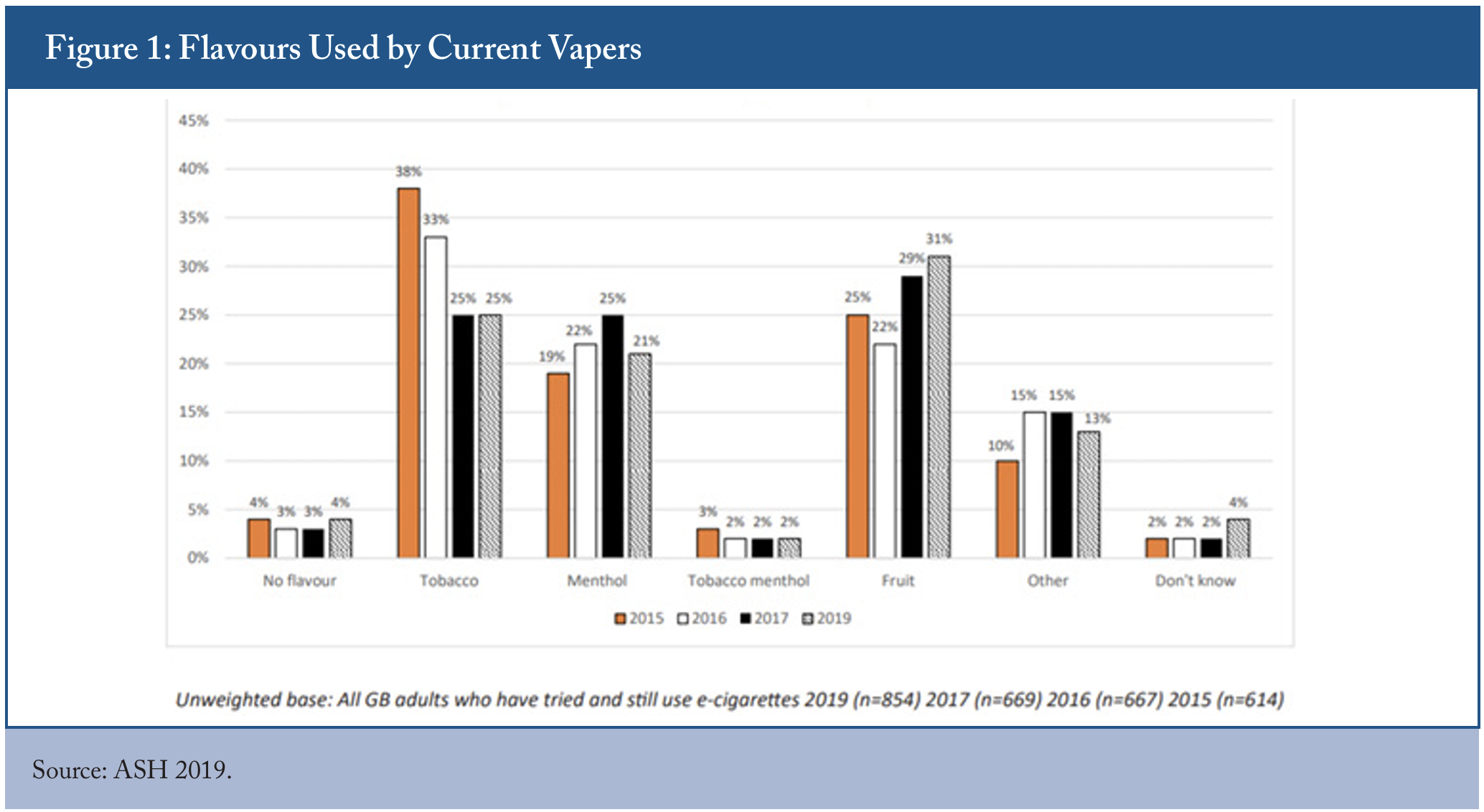
The flavouring of e-liquids and vape pods/ cartridges is also a factor in the attractiveness of vaping products for adult users, according to another speaker. Only about a quarter of current vapers used “Tobacco” flavour in the UK in 2019, down from 38 percent in 2015 (Figure 1). In contrast, use of fruit and other flavours has increased from about 35 percent in 2015 to 44 percent in 2019. The presenter referenced survey results which showed that many former smokers who vape use multiple flavours – they are most likely to initially use tobacco flavour but later prefer other flavours. Further, survey results support the notion that flavours play an important role in vaping-use experience and in reducing cigarette consumption and cravings (Farsalinos et al. 2013b). Former cigarette smokers switched between flavours more frequently than current smokers in the survey, providing some evidence that the relationship between flavours and smoking cessation evolves during the quitting process.55 4,515 participants reported their smoking status at the time of participation. 91.1 percent were former smokers while current smokers had reduced smoking consumption from an average of 20 cigarettes per day to an average of 4. Both subgroups had a median smoking history of 22 years and had been using electronic cigarettes for 12 months.
The panel noted that there is significant evidence that vaping and e-cigarette products are a helpful smoking cessation tool and that nicotine concentration and flavours are related to that effectiveness. In this context, the session concluded that policy discussion in North America, which is informed by the recent rise in vaping-related illnesses, has been predominantly focussed on health risks for non-smokers that initiate vaping and increases in youth nicotine consumption. If policies are developed in a rush or in a moral panic, it could lead to overall approaches that do not have the intended result and could in fact do more harm than good.
Regulations for vaping products should, therefore, be balanced between making the products inaccessible to youth and unattractive to non-smokers, while also providing smokers some incentive to quit – which requires there to be a better and/or cheaper alternative.
A panelist pointed to Sweden, Norway and the UK as countries that have taken a measured approach to vaping and have regulated it and promoted it predominantly as a smoking cessation tool. In North America, vaping and e-cigarette product manufactures and retailers are restricted from promoting them as a healthier alternative to smoking but were allowed to advertise as lifestyle products. Further, sales to youth were not initially restricted, allowing for easy access. Even so, the headline figures about increases in youth vaping may be over-stating the size of the problem. While about 1 in 5 teenagers in the US used a vaping product at least once in the 30 days prior to being surveyed, use patterns are strongly associated with tobacco use history. As a speaker noted, only about 1 percent of teens that have never smoked frequently used a vaping product. Further, among e-cigarette users in the past 30 days, 3.8 percent reported cravings and 61.8 percent reported using an e-cigarette less than 10 days in their life (West, Brown and Jarvis 2019).
Overall, according to the panelists, the media reports of an “epidemic” of teen vaping have been largely taken out of context and policy and regulation have become reactionary. Nicotine content and added flavours are associated with vaping product attractiveness and addictiveness, but also their effectiveness as a smoking cessation aid. Given that cigarette smoking is a leading cause of early mortality and that youth vaping is less prevalent than headlines would lead people to believe, the panel recommended that the priority should be allowing adult smokers to become educated about relative risks and make informed choices about vaping while also restricting youth access. While the long-term health effects of vaping are not known, there is significant evidence they are less harmful than smoking. Regulation should reflect this incremental improvement: one panelist cautioned that there will not necessarily be no new problems, but if the balance is tipped toward harm reduction then allowing the technology to develop is preferable to restricting it.
Session II – Youth Behaviours & Prevention Efforts
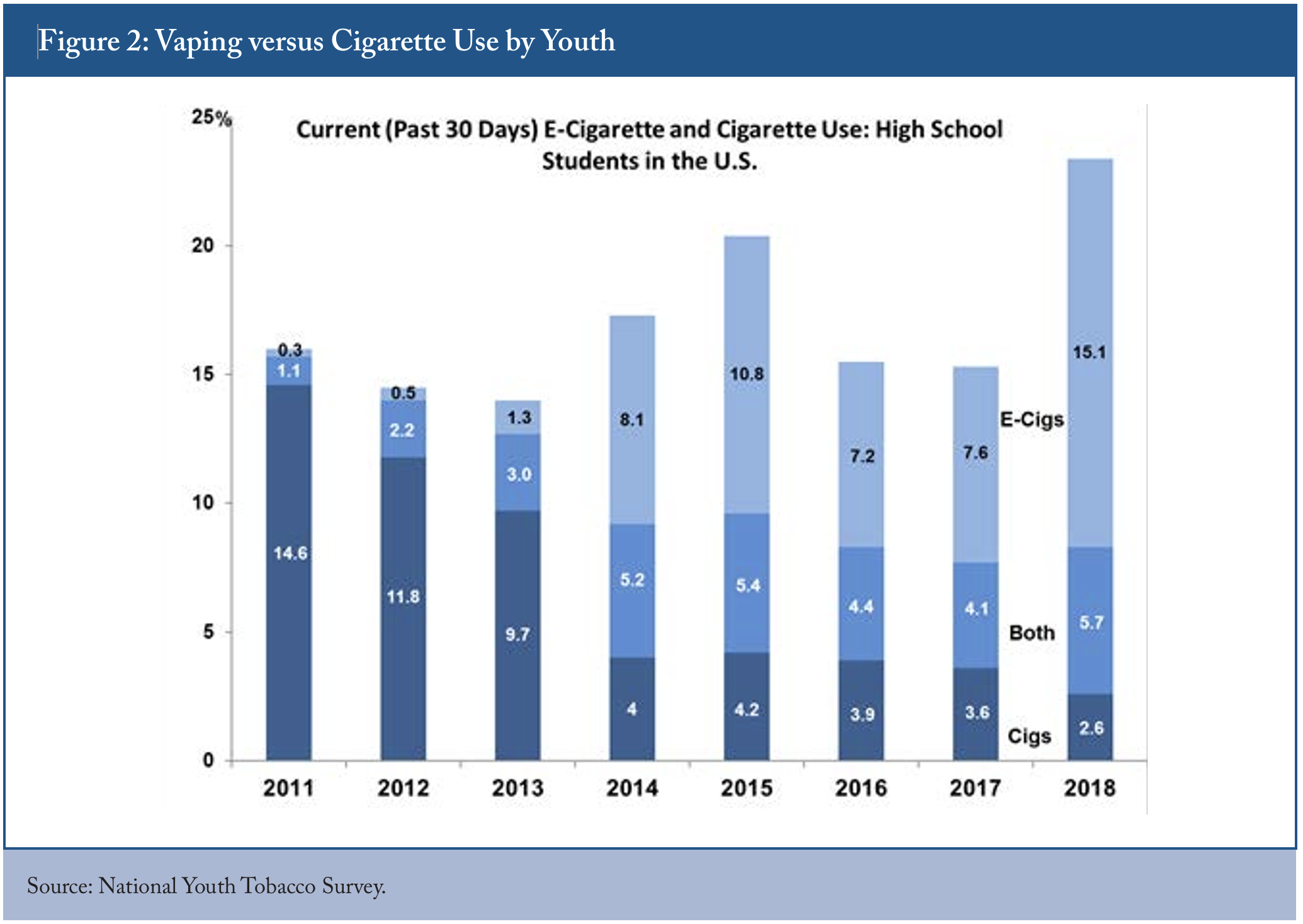
The session began with a discussion of the “epidemic” of teen vaping in the US, with the first speaker noting that it has been blown out of proportion and proper interpretation of the aggregate numbers requires some context. First, while vaping rates have increased, smoking rates have significantly declined (Figure 2). In 2019, the National Youth and Tobacco Survey indicated that 27.5 percent of high-school students had used a vaping device in the past 30 days, indicating a significant increase. The methodology of the survey was changed in 2019, however, and the increase is not reflected in other surveys.66 See McKeganey and Russell 2019; Vallone et al. 2019.
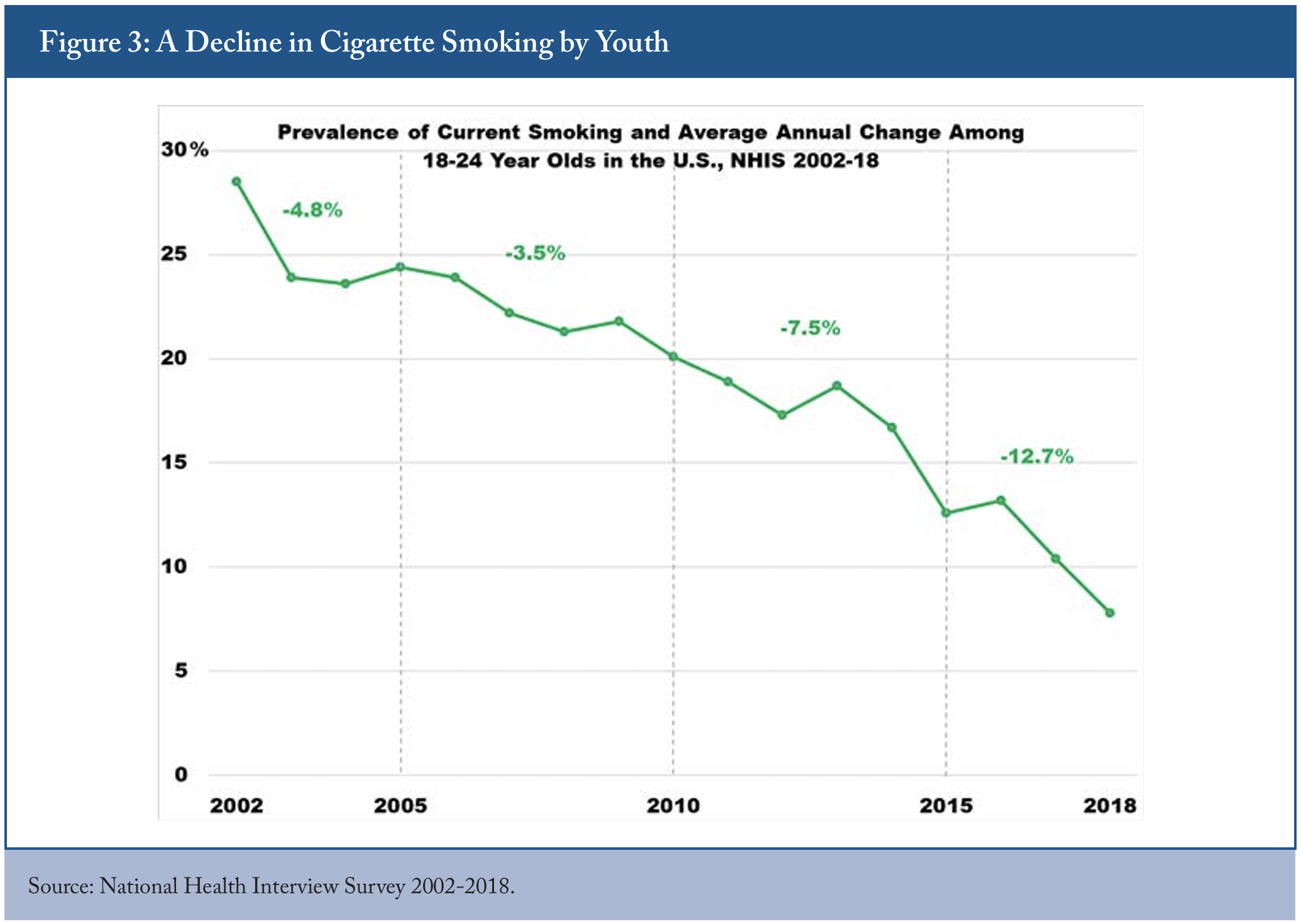
Further, of the 3.1 million American highschool students that had used a vaping product in the last 30 days, 600,000 were of legal age to purchase tobacco products. One panelist estimated that of the 2.5 million underage vapers, 1.7 million already used or tried other tobacco products. Of the 807,000 “virgin” underage vapers 712,000 vaped infrequently (~ 570,000 vaped for 1 to 5 days of the past 30, ~140,000 vaped 6 to 19 days of the past 30). Of the 3.1 million high-school aged vapers, a comparatively low 95,000 (or about 0.6 percent of American high-school students) are both under-age and daily new users that did not at least experiment with other forms of tobacco consumption. While there has been a significant increase in the number and percentage of high-school students using vaping products, many of those students are using them as a substitute for smoking tobacco or cannabis. Speakers note that the increase in vaping may have accelerated the decline in smoking rates (Figure 3). Further, it was noted that since youth smoking rates are declining with the introduction of vaping products and rise of their use, it is unlikely that vaping products act as a gateway to smoking for the majority of youth.77 See Cullen et al. 2019.
Conference participants heard that evidence of an increase in youth vaping is much different in the UK, compared to the US. In 2019, about 16 percent of 11- to 18-year-olds in the UK had tried vaping, the same as 2018 (one speaker noted that JUUL arrived in the summer of 2018, suggesting that newer pod-based ENDS products did not contribute to increases in youth use in the UK). About 4.9 percent of youth were current users and 1.6 percent used a vaping product at least once per week. Current use was rare among youth who had never smoked (about 1 percent). Meanwhile, cigarette use has declined from about 20 percent of 16- to 18-year-olds in 2010 to 12 percent in 2018. The UK organization Action on Smoking and Health concludes that “These findings do not support the hypothesis that e-cigarettes have renormalized youth smoking during a period of rapidly growing and largely unregulated e-cigarette use in the UK.”
In Canada, reported one panelist, about 3 percent of 16- to 19-year-olds use an e-cigarette daily (Hammond et al. 2019). Similarly, the Ontario Student Drug Use and Mental Health Survey (OSDUS 2017) indicates that about 10 percent of grade 10-12 students had used an e-cigarette in the past month with 1.6 percent using daily.88 Survey was conducted in 2017, prior to the introduction of vaping regulations and market entry of pod-based vaping systems. Almost half used vaping products that contained nicotine. More than half of Ontario students (56 percent) reported using recreational substances, only 10.7 percent of use was e-cigarettes.99 Similar to opioid usage rates (10.6 percent) and significantly lower than alcohol (42.5 percent) and cannabis (19 percent) usage rates. The Canadian Community Health Survey (CCHS) shows very little difference in past 30-day use of vaping products by youth in Ontario and Quebec between 2017 and 2018.1010 2017 rates range from 2.4 percent to 8.0 percent among 12- to 17-year-olds. Rates in 2018 ranged from 5.2 percent to 7.4 percent for the same age group.
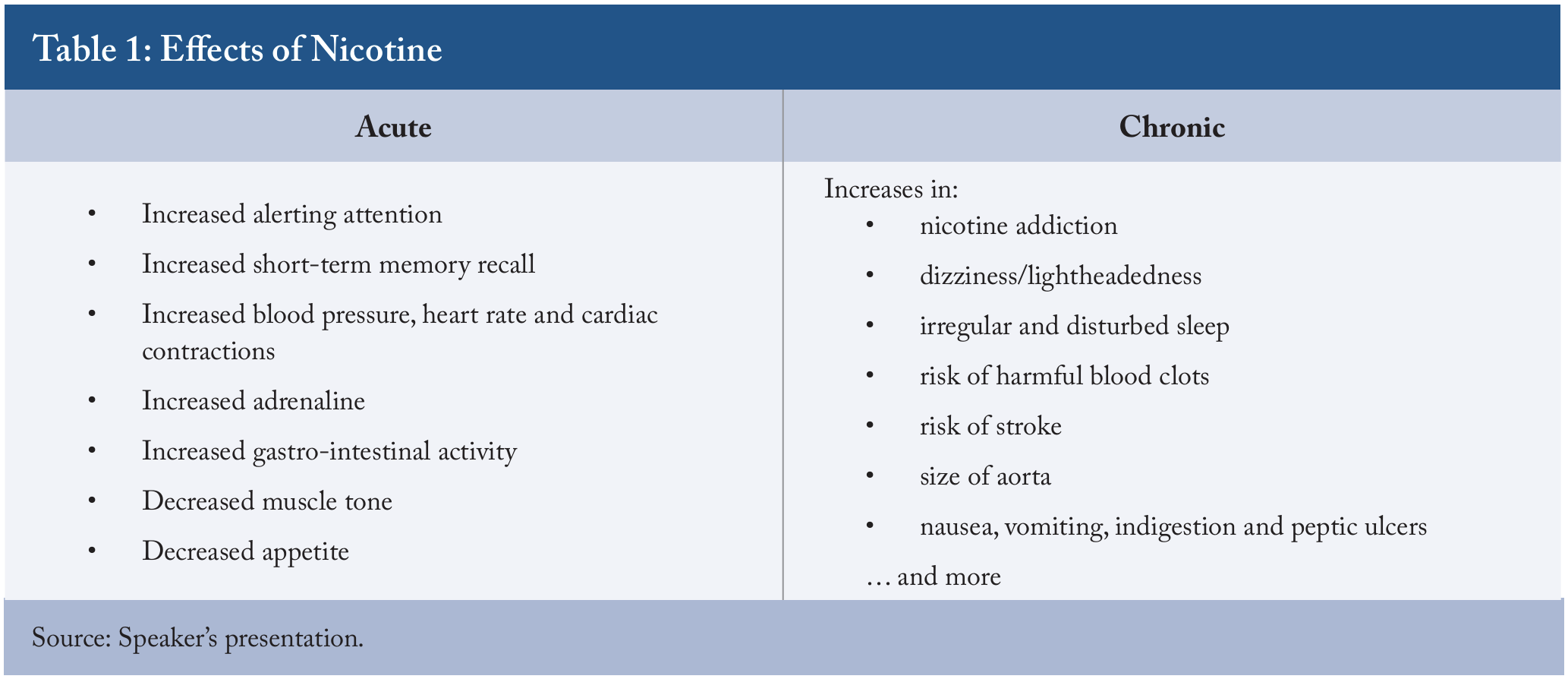
The final panelist cautioned: while the proportion of youth vaping may not be as large as some headlines would suggest, there is still concern about the long-term health effects of vaping for the minority of youth who use the products; in particular, the effects of nicotine or other yet-unknown chemicals that could affect brain development (Table 1).
The panelist noted that there is a fundamental reorganization that takes place in the adolescent brain. Basically, the part of the brain related to reward feedback and emotion (hormone-fueled limbic system) matures before the parts that deal with planning, personality expression, decisionmaking and moderating social behaviour (prefrontal cortex).
The presenter explained that there is an imbalance the developing adolescent brain that makes them more likely to engage in risk-taking and novelty-seeking behaviours without thinking about the consequences. The presentation noted that there are currently no evidence-based studies that have examined the long-term effects of e-cigarette use on the developing brain in humans. In adolescents, the brain isn’t fully developed and is more susceptible to the addictive properties of nicotine. Compared to adults, adolescents are generally more motivated by rewards and are less averse to risks. The only studies from which we can infer possible effects are those looking at the effects of nicotine in rodents. Several animal studies have shown that rodents are more sensitive to the rewarding effects of nicotine when administered young. In addition, the presentation noted that nicotine may lead to higher levels of dependence by exerting neurotoxic effects that could interfere with adolescent cognitive development, executive functioning, and inhibitory control.
Though the research on the effects of recreational drug use on the human adolescent brain is sparse, the panelist discussed the existing evidence of detrimental cognitive effects. Binge-drinking is associated with reduced gray matter in the pre-frontal cortex. Chronic smoking decreases pre-frontal cortex volume in young adults and is correlated to severity of dependence. Adolescent cannabis use is also associated with decreased cortical volume and connectivity. It is unclear, however, if these differences in neurophysiology are a cause or consequence of recreational drug use. Given the addictive potential of vaping products containing nicotine, this panelist concluded that it is reasonable to restrict youth access.
There are various policies that could be useful in making vaping products inaccessible to youth while maintaining their availability to adults. One difference between the UK and North America is that public messaging and advertising regulations in the UK promote vaping products as an alternative to smoking. In North America, vaping products could not be advertised as a substitute for smoking nor were companies allowed to make health claims about the relative benefits. They could, however, be advertised as a lifestyle product.
Evidence from Canadian research shows that restricting sales to youth results in lower growth in youth e-cigarette use (Nguyen 2019). Other policy options suggested by panelists include: plain-packaging, health warning labels, nicotine limits, flavour bans and restricting sales to agelimited stores. Plain packaging and health warning labels can communicate valuable information to potential users but one panelist cautioned that they are not likely to have significant effects on their own.1111 Australia is frequently touted as an example of plain packaging working (2013). However, a careful examination indicates that smoking fell by quite a modest amount and the plain packaging was accompanied by four successive large price increases since its implementation. Likewise, for large graphic health warnings there is no evidence from shipments data in Canada in 2001 that the GHWs had a perceptible impact (Irvine and Nguyen, working paper 2019). Restricting sales of vaping products to agerestricted stores could be effective, but would be counter intuitive if cigarette sales are not similarly restricted. The availability of flavours may increase the attractiveness of vaping products to youth but it also increases their appeal to adult smokers. It is likely that a mix of policies should be employed to address increases in youth vaping. The panel concluded that the overall policy goal should be harm reduction and total health improvement as opposed to over-zealous restrictions to prevent youth access at the expense of potential benefits for adult and youth smokers.1212 Throughout the day, multiple participants discussed the question of whether restricting youth access paradoxically makes the products more attractive to youth. There was not consensus on whether it does, but there was general agreement that sales restrictions are not fully effective for restricting youth access to particular products – as evidenced by youth drug and alcohol use.
Session III – Global Lessons: How Have Other Countries Tackled Vaping Concerns?
The first presenter began by discussing the effectiveness of existing tobacco control policies based on recent research. For example, using data from the World Health Organisation’s (WHO) GlobalInfo Database, David Mendez and colleagues have estimated that, if the WHO’s recommended multipronged approach to tobacco control (known as the MPOWER1313 Monitor tobacco use and prevention policies. policy package) had been implemented fully and immediately in 2010 and ran through to 2030 without interruption, the global prevalence of smoking would reduce from approximately 794 million smokers to 523 million smokers (13.2 percent), accounting for population growth.
The overarching goal of tobacco control is to save lives as quickly as possible. This goal dictates that we must change our approach to the smoking epidemic if the current approach is not saving lives as quickly as we believe is possible. One presenter noted that the projection that there will be at least 523 million smokers globally by 2030 should leave us in little doubt tells that if the only actions we continue to take are to enforce or steadily implement the provisions of the WHO Framework Convention on Tobacco Control (FCTC),1414 The FCTC is the WHO treaty to implement recommended policies to prevent tobacco use. MPOWER contains both policy recommendations for implementing FCTC at the country level and the ongoing monitoring of implementation and effects. then a smokefree world cannot realistically be expected to be achieved in the near future. The FCTC provisions will continue to be modestly effective in reducing smoking. Eradicating smoking from society, however, will require more radical and pragmatic solutions than those already in place, the session heard.
In addition to existing conventional approaches, panelists pointed out that harm reduction strategies represent a major opportunity to reduce the prevalence and health impacts of tobacco smoking. Harm reduction aims to reduce or prevent harm in those smokers who do not quit smoking in response to conventional measures. One way to accelerate the decline in use of deadly combustible tobacco products would be to encourage and support all smokers who do not feel able or willing to stop using nicotine to switch to exclusive use of products that deliver nicotine safely and are decoupled from the by-products of combusted tobacco.
A speaker noted that, since 2007, regulations and public health policy in the UK has been based on the principle of harm reduction and the benefits of switching from combustible cigarettes. The speaker noted that the policy is reevaluated annually to ensure it remains consistent with scientific and medical knowledge about the health effects of vaping and other smokeless nicotine products. Numerous reports from Public Health England, the Royal College of Physicians and other have reiterated the potential public health benefits of the policy.1515 See Royal College of Physicians 2007, 2008, 2016; McNeill et al. 2015; and Public Health England 2016. In 2016, a joint statement from Public Health England, Action on Smoking and Health, Cancer Research UK, the British Lung Foundation and others issued a joint statement on the developing public health consensus regarding e-cigarettes:
We all agree that e-cigarettes are significantly less harmful than smoking. One in two lifelong smokers dies from their addiction. All the evidence suggests that the health risks posed by e-cigarettes are relatively small by comparison but we must continue to study the long-term effects.
The public health opportunity is in helping smokers to quit, so we may encourage smokers to try vaping but we certainly encourage vapers to stop smoking tobacco completely.
We should not forget what is important here. We know that smoking is the number one killer in England and we have a public health responsibility to provide smokers with the information and the tools to help them quit smoking completely and forever. Public Health England 2016.
There are six core principles to e-cigarette and vaping policy in the UK:
- Tobacco Control + Tobacco Harm Reduction.
- ENDS represent opportunity to accelerate decline in smoking.
- ENDS are 95 percent less harmful than smoking.
- Inhaling smoke is the problem.
- We know enough to act now.
- Benefits to adults who switch are far greater than harms to youth who initiate e-cigarette use.
The approach taken in the UK has had significant benefits and so far appears to be working effectively according to the panelist. In 2017, between 50,700 to 69,930 smokers in England had switched to vaping who would otherwise have carried on smoking (Beard et al 2019). During period of rapid growth in prevalence of e-cigarette use and limited regulation, declines in adult and youth smoking rates have significantly accelerated. The presenter went on to say that the percentage of smokers attempting to and successful at quitting have significantly increased and e-cigarettes are the most commonly used and most effective smoking cessation aid.1616 Vaping increases chances of quitting smoking by 95 percent; varenicline (Champix/Chantix), a prescription medication to treat smoking addiction, increases chances by 82 percent. In addition, youth e-cigarette use is consistently low and almost entirely confined to youth who are smoking/have smoked.
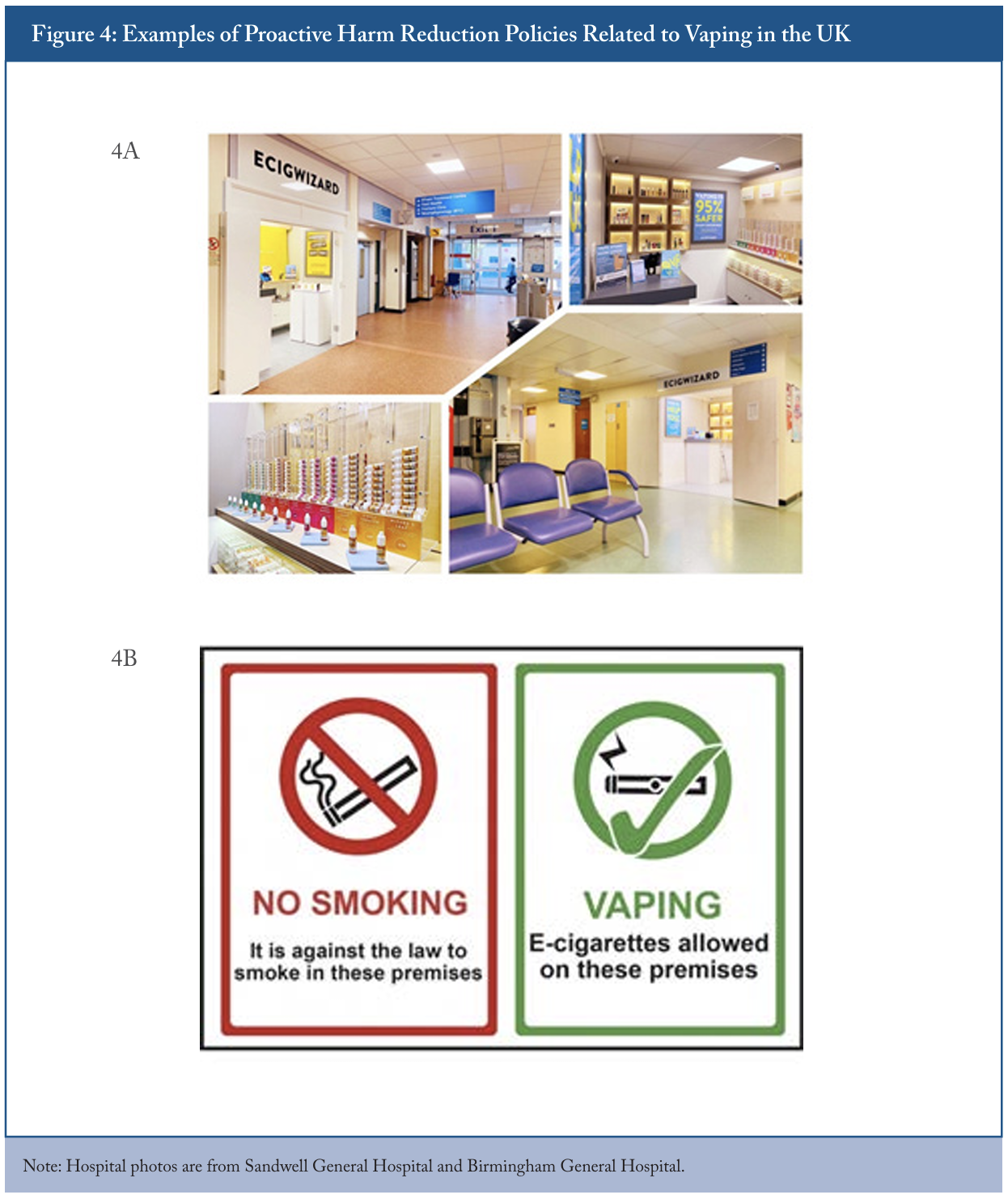
There is much that Canadian policymakers can learn from the experience in the UK, and less from the experience in the United States, according to the panel. From the outset, vaping products have been tightly regulated and controlled in the UK and public health information has positioned the products exclusively as a smoking cessation tool. Presentations highlighted that policies are proactive and encourage people to gain information about e-cigarettes and the benefits of smoking cessation. Placing vape shops in hospitals is one example noted by a speaker of integrating access to public health and information with vaping products as a smoking cessation tool (Figure 4A). Similarly, passive measures to encourage switching are also used – allowing vaporizers to be used on public property while maintaining a ban on cigarette smoking, for example (Figure 4B).
Contrasting the approach to public health policy and regulations on vaping products in the UK, another presenter reviewed the current US regulations on vaping devices. Vaping devices are largely unregulated in the US though the FDA deemed all products meeting the definition of a tobacco product (except accessories) to be subject to FDA’s authority in May of 2016. Essentially, all vaping products currently available for sale in the US are illegal because they did not receive premarket authorization. The FDA, however deferred enforcing the regulations to allow products already being marketed to follow proper procedure to receive authorization and companies have until May 12, 2020, to comply or face enforcement actions. The presenter noted that the rise in vapingrelated illness in the US resulted in significant uncertainty for the public and public health authorities. With the causes of illnesses unknown, initial CDC guidance was to cease use of all vaping products. Similarly, public education campaigns focus on the negative aspects of vaping and do not encourage the use of the products by anyone.
Essentially, policies and regulations for vaping products in the US are being developed after the products have been available to the public for a significant length of time, yet with little information about the risks and benefits using them may pose to individual health. The speaker pointed out that the large number of vaping-related illnesses and deaths have only added to the confusion as politicians, the media, industry and regulators provide competing narratives. The moral panic surrounding youth vaping was likened to “Reefer Madness” and is not an ideal situation in which to develop evidence based policy.
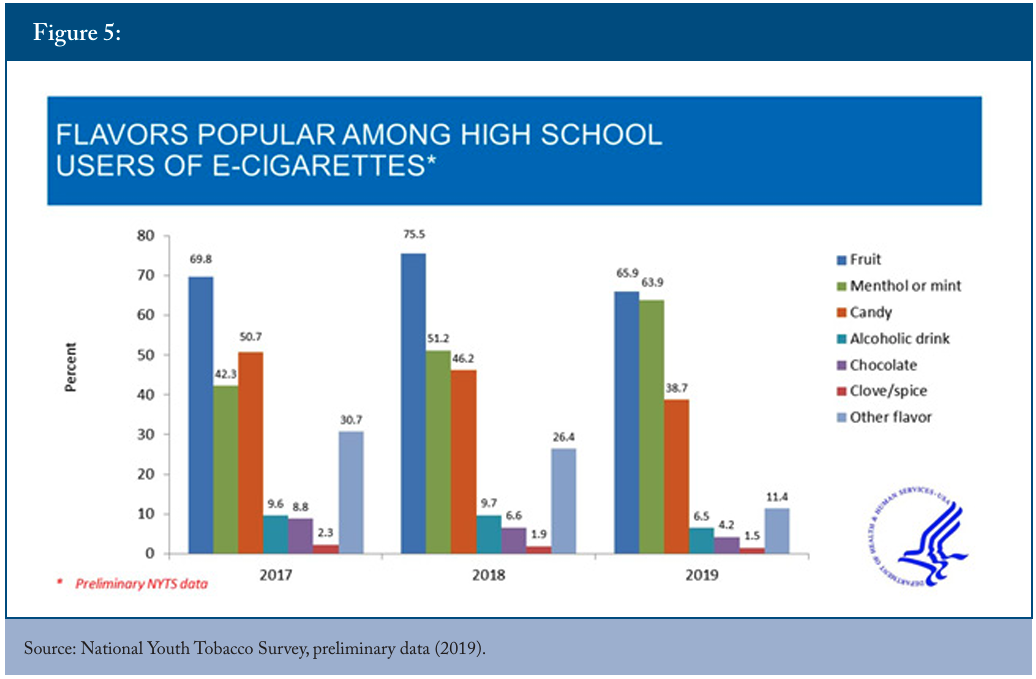
Since the initial rise in vaping related illnesses, the CDC has clarified its guidance and identified vitamin-E acetate as the likely cause of the illnesses after testing lung fluid samples from afflicted patients. Vitamin E acetate was used as a solvent/ additive in some vaping products – most (possibly all) of which were sourced from the illegal cannabis market. Federal, state and municipal regulations, however, have focused on restricting sales of vaping products and banning flavours that may be appealing to youth. Fruit, candy and mint/menthol are the most popular flavours of e-cigarettes for teenage users (Figure 5). FDA guidance on enforcement notifies industry that it will prioritize actions against manufacturers selling any flavoured, cartridge-based ENDS product (other than tobacco or menthol flavor) and those who have not taken adequate steps to prevent their products appealing to or being accessed by minors.1717 Guidance document issued after the conference proceedings. See FDA (2020).
The approach to regulation in the US is focused on the risks of vaping and the speaker noted that the country currently does not have a public health strategy related to switching and smoking cessation. A participant noted that local bans on the sale of nicotine-containing vaping products while maintaining the availability of cigarettes may actually result in some vapers switching to combustible cigarettes to satisfy their addiction. The restriction on flavours is somewhat justified, but some panelists thought it is unlikely to eliminate the appeal of vaping products to youth as menthol is allowed and is used by a majority of teen vapers.
The lessons for Canada in the experiences of the US and UK, the panel concluded, are to take a measured approach to regulation that balances the risk of new health issues with the potential benefits of accelerating the decline in smoking. Vaping products should be promoted to adult smokers as a healthier alternative while maintaining current public health campaigns about the risks of nicotine addiction. In particular, it is important for governments and health authorities to be as open as possible with the public about what is known and unknown about health risks related to vaping. Black-market cannabis vaping products are likely responsible for the severe illnesses that have afflicted Americans but have yet to appear in the UK.
Once regulations are in place, enforcement against illegal producers and public education about the relative safety of legal and illegal products should be a high priority. Presenters recommend that, similar to the UK, policies and regulation should be evaluated regularly to ensure they are compatible with the most recent scientific evidence and change as new information is learned. Canada should avoid, as much as possible, the conflicting information and moral panic that has occurred in the US. To do so, panelists urged Health Canada to be diligent in regularly updating guidance for producers and communicating new information to the public as quickly as possible.
Session IV – Black Market, Sin Tax and Emerging Trends
Panelists agreed that under current regulations, the black and regulated market are posing similar risks in North America. Retroactive certification of producers is ongoing in the US (with a deadline May 12, 2020) and, in Canada, there is a lack of federal manufacturing, testing and enforcement standards. Vaping products are much more heavily regulated in Europe, and panelists noted there might be distinct characteristics between legal and illegal vaping products in the more highly regulated jurisdictions. Some regulation is clearly required, as evidenced by vaping related illnesses caused by a particular solvent (vitamin E acetate). The first step to differentiating black market and legal producers is to develop clear standards informed by research. One suggestion was to mandate and enforce ingredient restrictions by requiring all products to have content labels. To decrease counterfeit and illicit products in circulation, a panelist recommended requiring legal products to have a seal/stamp similar to tobacco and legal cannabis products. In addition, there is a need to educate the public with campaigns aimed at adults wanting to quit smoking.
A speaker noted that, so far, most research has focussed on the benefits of vaping relative to smoking tobacco, not the health effects of vaping on its own. For example, the estimate that vaping is 95 percent less harmful than smoking is based on what is not in the vapour, compared to cigarette smoke. This concern was echoed by some other participants throughout the day. Scientific study and regulation should be more focussed on what is in vapour. Similarly, the presentation cautioned that different types of devices may have different effects due to the materials they are made of, the consistency and level of temperature and other factors. The current regulation of vaping products in Canada is significantly less stringent than those for inhalable medicines, which are highly scrutinized by Health Canada.
The same panelist noted that inhalation of a molecule can have significantly different health effects than ingestion of the same molecule. The presentation noted a particularly relevant example is vitamin E acetate, which is used in supplements and topical products and does not seem to cause harm when it is eaten or contacts skin. The same chemical appears to be harmful to lung functioning when inhaled – as evidenced by the deaths from vapingrelated illnesses in the US. Many of the chemicals in vaping liquids such as polyethylene glycol and food additives are considered safe, but have not been evaluated for safety related to inhalation/ pulmonary delivery. Further, the ingredients in vaping liquid provide only partial information about the chemicals being inhaled and their effects on the body. The panelist explained that when vaping liquid is heated, it may cause additional chemical reactions that change the composition of the vapour being inhaled. Further, it was noted that inhalation is one of the most efficient absorption pathways and will exhibit different pharmacokinetic effects than ingestion with respect to bioactivity and toxicity.
The panelist expressed the view that in the current environment it is unclear who is responsible for ensuring vaping products are safe – the producers or government? To develop effective regulations for vaping products that protect public health the first step should be to outline the potential risks and identify which ones are the highest priority. Taking an objective approach to the risks of vaping, not the benefits relative to smoking, would help develop consumer protection standards and regulations.
While the long-term health effects of vaping and the toxicity of particular ingredients to lung health remains largely unknown, illnesses related to smoking remain one of the largest contributors to premature mortality and there are likely public health benefits to encouraging smokers to switch, noted another participant. At the same time, vaping should not be encouraged by non-smokers, particularly youth. One presenter focussed on one particular aspect of vaping products that makes them attractive relative to cigarettes: price. Further, policymakers can affect this relative attractiveness through taxation.
A speaker noted that cigarettes are heavily taxed. There are sound reasons for this given the significant evidence on negative health impacts associated with smoking and the fact that smokers are unable to internalize negative externalities (Irvine and Sims, 2015). Higher cigarette taxes are also a barrier to youth initiation (Sen, Ariizumi and Driambe 2010; Sen and Wirjanto 2010). While negative health outcomes from vaping are believed to be smaller in magnitude, consuming nicotine and other chemicals from vaping are also detrimental to health. Hence, the speaker recommended that vaping products should be taxed but at a lower rate than cigarettes. Taxes on vaping products could reduce attractiveness to youth by increasing their price.
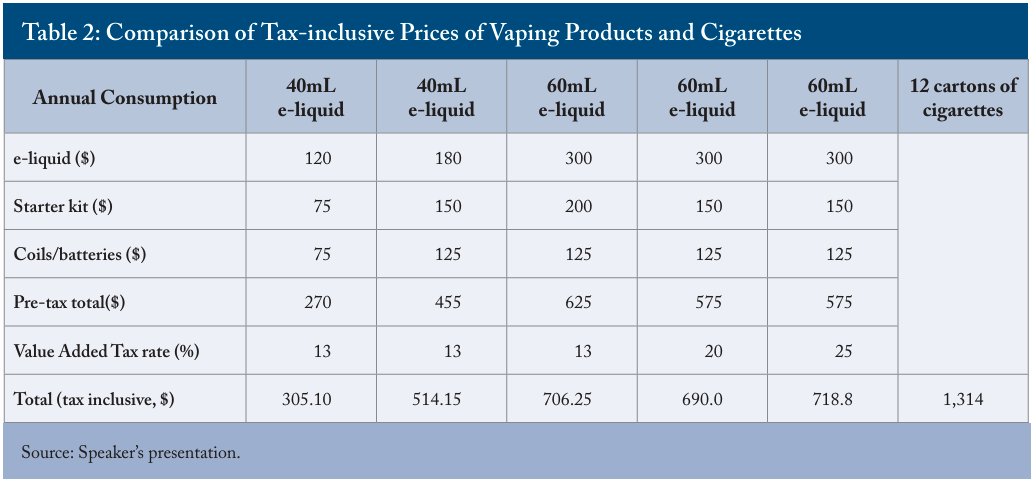
The dilemma is that higher taxes on vaping products might result in higher prices and hence, a reduced incentive for smokers to switch to vaping. There is evidence of statistically significant crossprice elasticities.1818 A measure of the change in the quantity demanded in response to a change in price. Taxes on vaping might also lead to thriving black markets as is the case with cigarettes in Ontario (Irvine and Sims 2012; Sen 2017). However, BC has announced a 20 percent tax on vaping products. Since vaping is significantly cheaper than smoking for equivalent levels of nicotine consumption, the speaker provided an example showing that taxation could effectively preserve the incentive for smokers to switch to vaping products while simultaneously making them less attractive to youth due to increased cost (Table 2).
Panelists concluded there is significant uncertainty about the long-term health effects of vaping and that product regulations should be developed objectively and not relative to the dangers of smoking. Since vaping is likely less harmful than smoking, however, there are potential benefits in encouraging smokers to switch. Taxation, public education, and clear guidelines for consumers and producers should all be used to find the appropriate balance between protecting public health and harm reduction.
References and Additional Resources
Action on Smoking and Health (ASH). 2019. “Use of e-cigarettes (vaporisers) among adults in Great Britain.” Available at: https://ash.org.uk/wpcontent/uploads/2019/09/Use-of-e-cigarettesamong-adults-2019.pdf
Brown, J., E. Beard,, D. Kotz, S. Michie, and R. West, R. 2014. “Real‐world effectiveness of e‐cigarettes when used to aid smoking cessation: a cross‐sectional population study.” Addiction, 109(9), 1531-1540.
Bhatta, D. and S. Glantz. 2019. “Association of E-cigarette use with respiratory disease among adults: a longitudinal analysis.” American Journal of Preventative Medicine. Elsevier: December.
Cullen, K.A., A.S. Gentzke, M.D. Sawdey, et al. 2019. “e-Cigarette use among youth in the United States, 2019.” JAMA. doi:10.1001/jama.2019.18387.
Eddingsass, N., et al. 2018. “Qualitative Analysis of E-Liquid Emissions as a Function of Flavor Additives Using Two Aerosol Capture Methods.” International Journal of Environmental Research and Public Health 15(2): 323. Available at: https://www.mdpi.com/1660-4601/15/2/323
Farsalinos, K., et al. 2013(a). “Evaluation of Electronic Cigarette Use (Vaping) Topography and Estimation of Liquid Consumption: Implications for Research Protocol Standards Definition and for Public Health Authorities Regulation.” International Journal of Environmental Research and Public Health 10(6): 2500–2514. June. Available at: https://www.ncbi.nlm.nih.gov/pmc/articles/PMC3717749/
Farsalinos K., et al. 2013 (b). “Impact of Flavour Variability on Electronic Cigarette Use Experience: An Internet Survey.” International Journal of Environmental Research and Public Health 10(12): 7272–7282. December. Available at: https://www.ncbi.nlm.nih.gov/pmc/articles/PMC3881166/
Food and Drug Administration. 2020. “Enforcement Priorities for Electronic Nicotine Delivery Systems (ENDS) and Other Deemed Products on the Market Without Premarket Authorization.” Available at: https://www.fda.gov/media/133880/ download
Hajek, P., et al. 2019. « A Randomized Trial of E-Cigarettes versus Nicotine-Replacement Therapy. New England Journal of Medicine: Jan 30. https://www.nejm.org/doi/full/10.1056/NEJMoa1808779
Hammond, D., et al. 2019. “Prevalence of vaping and smoking among adolescents in Canada, England, and the United States: repeat national cross sectional surveys.” British Medical Journal 365:I2219. Available at: https://www.bmj.com/content/365/bmj.l2219
Irvine, I., and W. Sims. 2012. A Taxing Dilemma: Assessing the Impact of Tax and Price Changes on the Tobacco Market. Commentary. Toronto: C. D. Howe Institute. May. Available at: https://www.cdhowe.org/public-policy-research/taxing-dilemmaassessing-impact-tax-and-price-changes-tobaccomarket
Irvine, I, and W. Sims. 2015. “The simple analytics of tobacco taxation with illegal supply.” Canadian Journal of Economics 47 (4): 1153-1172. Available at: https://onlinelibrary.wiley.com/doi/abs/10.1111/caje.12112
Landman, S.T., I. Dhaliwal I., C.A. Mackenzie, T. Martinu, A. Steele, and K.J. Bosma. 2019. “Life-threatening bronchiolitis related to electronic cigarette use in a Canadian youth.” Canadian Medical Association Journal CMAJ 191(48):E1321-E1331. doi: 10.1503/cmaj.191402. December. Epub 2019 Nov 20. Available at. https://www.ncbi.nlm.nih.gov/pubmed/?term=31753841
McKeganey, N., and C. Russell. 2019. “Prevalence of Awareness and Use of JUUL E-cigarettes in a National Probability Sample of Adolescents in the United States.” American Journal of Health Behavior 43(3): 591-605. Available at: https://docs.wixstatic.com/ugd/c53053_18dde11990554968a36e11f586c29d34.pdf
McLean, W. 2007. “Medication Adherence Initiatives Part 1.” Canadian Pharmacists Journal July/August. 140(4): 254-261.
McNeill, A., L. Brose, R. Calder, and S. Hitchman. 2015. “E-cigarettes: an evidence update – A report commissioned by Public Health England.” Available at: https://assets.publishing.service.gov.uk/government/uploads/system/uploads/attachment_data/file/733022/Ecigarettes_an_evidence_update_A_report_commissioned_by_Public_Health_England_FINAL.pdf
Nguyen, H. 2019. “Association of Canada’s Provincial Bans on Electronic Cigarette Sales to Minors with Electronic Cigarette Use Among Youth.” JAMA Pediatrics. November. Available at: https://doi.org/10.1001/jamapediatrics.2019.3912
O’Leary, R.; M. MacDonald, T. Stockwell, and D. Reist. 2017. “Clearing the Air: A systematic review on the harms and benefits of e-cigarettes and vapour devices.” Victoria, BC: Centre for Addictions Research of British Columbia.
Public Health England. 2016. “E-cigarettes: a developing public health consensus.” Available at: https://www.gov.uk/government/publications/ecigarettes-a-developing-public-health-consensus
Ramström L., R. Borland, and T. Wikmans. 2016. “Patterns of Smoking and Snus Use in Sweden: Implications for Public Health.” International Journal of Environmental Research and Public Health. 2016 Nov; 13(11): 1110. Available at: https://www.ncbi.nlm.nih.gov/pmc/articles/PMC5129320/
Royal College of Physicians. 2016. Nicotine without smoke: Tobacco harm reduction. London: RCP. Available at: https://www.rcplondon.ac.uk/projects/outputs/nicotine-without-smoke-tobacco-harmreduction
Royal College of Physicians. 2008. Ending tobacco smoking in Britain: Radical strategies for prevention and harm reduction in nicotine addiction. London: RCP. Available at: https://shop.rcplondon.ac.uk/products/ending-tobaccosmoking-in-britain-radical-strategies-forprevention-and-harm-reduction-in-nicotineaddiction?variant=6363612101
Royal College of Physicians. 2007. Harm Reduction in nicotine addiction: helping people who can’t quit. London: RCP. Available at: https://shop.rcplondon.ac.uk/products/harm-reduction-innicotine-addiction-helping-people-who-cantquit?variant=6509405637
Sen, A. 2017. Smokes, Smugglers and Lost Tax Revenues: How Governments Should Respond. Commentary 471. Toronto: C.D. Howe Institute. February. Available at: https://www.cdhowe.org/sites/default/files/attachments/research_papers/mixed/Commentary_471_0.pdf
Sen, Anindya, Ariizumi Hideki, and Driambe Daciana, 2010. “Do Changes In Cigarette Taxes Impact Youth Smoking? Evidence from Canadian Provinces,” Forum for Health Economics & Policy, De Gruyter, 13(2): 1-25, August.
Sen, A., and T. Wirjanto. 2010. “Estimating the impacts of cigarette taxes on youth smoking participation, initiation, and persistence: empirical evidence from Canada.” Health Econ. 19(11):1264-80. November.
Sumner, W., and K. Farsalinos. 2018. “Lessons and Guidance from the Special Issue on Electronic Cigarette Use and Public Health.” International Journal of Environmental Research and Public Health 15(7): 1338; Available at: https://www.mdpi.com/1660-4601/15/7/1338/htm
Vallone, D., M. Bennett, H. Xiao, L. Pitzer, and E. Hair. 2019. “Prevalence and correlates of JUUL use among a national sample of youth and young adults.” Tobacco Control 28(6). Available at: https://tobaccocontrol.bmj.com/content/28/6/603
West, R., J. Brown, and M. Jarvis. 2019. “Epidemic of youth nicotine addiction? What does the National Youth Tobacco Survey reveal about high school e-cigarette use in the USA?” (Preprint). Qeios: October. Available at: https://www.qeios.com/read/article/391